What is Kaiseki? A Beginner’s Guide to Japan’s Traditional Multi-Course Meal

Introduction – The Art of Japanese Dining
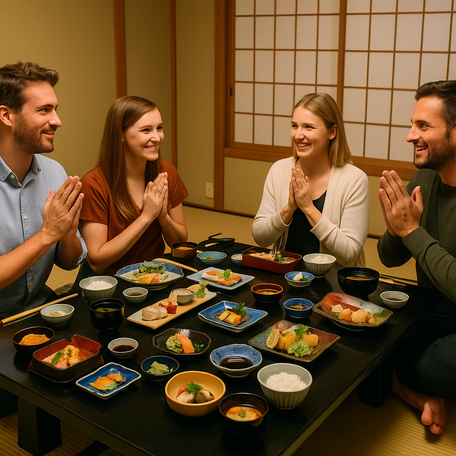
Kaiseki (懐石料理) is one of the most refined dining experiences in Japan. More than just a meal, it’s an art form that balances taste, presentation, seasonality, and hospitality. For many travelers, the idea of a multi-course kaiseki dinner may feel intimidating. This guide will explain what kaiseki is, what to expect, and how to enjoy it—even if it’s your first time.
What is Kaiseki?
-
Definition: Kaiseki is a traditional Japanese multi-course meal, often served at ryotei (traditional restaurants) or ryokan (Japanese inns).
-
Philosophy: It emphasizes harmony with nature, highlighting seasonal ingredients.
-
Style: Courses are served in a specific sequence, each dish carefully arranged to please both the eye and palate.
Kaiseki vs. Omakase
-
Kaiseki – Structured, multi-course meal based on seasonality.
-
Omakase – “Chef’s choice” menu, often sushi-focused.
-
👉 Travelers often confuse them, but kaiseki is broader in scope and rooted in traditional Japanese culture.
Typical Kaiseki Courses
While menus vary, a standard kaiseki meal often includes:
-
Sakizuke (先附) – Appetizer, similar to an amuse-bouche.
-
Suimono (吸い物) – Clear soup.
-
Sashimi (刺身) – Fresh seasonal fish.
-
Nimono (煮物) – Simmered dish, often vegetables or fish.
-
Yakimono (焼物) – Grilled seasonal item, such as fish or wagyu beef.
-
Mushimono (蒸し物) – Steamed dish, like chawanmushi (egg custard).
-
Agemono (揚げ物) – Fried dish, often tempura.
-
Gohan (御飯), Konomono (香の物), Tomewan (止椀) – Rice, pickles, miso soup.
-
Mizumono (水物) – Seasonal dessert, such as fruit or wagashi.

Seasonal Ingredients
Kaiseki highlights what’s freshest in each season:
-
Spring – Bamboo shoots, cherry blossom-themed dishes.
-
Summer – Ayu (sweetfish), light cold dishes.
-
Autumn – Matsutake mushrooms, chestnuts, persimmons.
-
Winter – Hotpots, root vegetables, citrus fruits.
Dining Etiquette for Kaiseki
-
Dress appropriately – Smart casual or traditional attire if staying at a ryokan.
-
Pace yourself – Kaiseki meals are long; courses are served one by one.
-
Respect the presentation – Every dish is arranged artistically.
-
Tipping – Not required. A simple “Arigatou gozaimasu” (thank you) is enough.
Where to Try Kaiseki
-
Ryokan stays – Kaiseki dinner is often included.
-
Ryotei in Kyoto or Tokyo – High-end restaurants specializing in kaiseki.
-
Modern kaiseki restaurants – Contemporary versions with creative touches.
-
Price range: around ¥10,000–¥30,000 per person, though lunch kaiseki can be more affordable.
Useful Phrases
-
“Kaiseki o tanoshimi ni shiteimasu” – I’m looking forward to the kaiseki meal.
-
“Osusume wa nan desu ka?” – What do you recommend?
-
“Arigatou gozaimashita” – Thank you very much.
Tips for First-Time Travelers
-
Book in advance—kaiseki restaurants often require reservations.
-
If you have dietary restrictions, inform the restaurant beforehand.
-
Don’t worry about eating everything perfectly—the experience is about enjoyment, not rules.
How Our Service Helps
Many kaiseki restaurants accept reservations only in Japanese and may require a phone call. Our service helps secure bookings so you can enjoy this once-in-a-lifetime experience with ease.
Conclusion
Kaiseki is more than a meal—it’s a journey through Japan’s culture, seasons, and hospitality. For first-time visitors, it may seem complex, but with the right guidance, it becomes one of the most memorable experiences of a trip to Japan.
👉 Contact us if you’d like assistance booking a kaiseki restaurant during your stay.