Yakiniku vs. Korean BBQ: What’s the Difference in Japan?
Introduction – Similar But Different
Travelers visiting Japan often ask: “Is yakiniku the same as Korean BBQ?” At first glance, both involve grilling meat at the table and sharing with friends. But in Japan, yakiniku has developed its own unique style—different cuts, sauces, and dining culture. This guide explains the key differences so you can appreciate both experiences and understand what makes Japanese yakiniku special.
Origins of Yakiniku and Korean BBQ
- Korean BBQ: Originated in Korea, known for marinades and bold flavors.
- Yakiniku in Japan: Influenced by Korean BBQ after WWII, but evolved into a Japanese-style barbecue.
- Today, yakiniku is considered a staple of Japanese dining, with wagyu beef at its center.
Meat Cuts – Japan vs. Korea
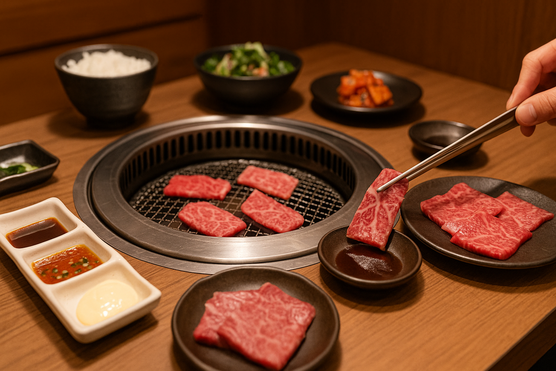
Yakiniku (Japan)
- Wide variety of cuts: tongue (gyutan), short ribs (karubi), skirt steak (harami).
- Focus on wagyu beef, prized for marbling and texture.
- Cuts are thinner, designed for quick grilling.
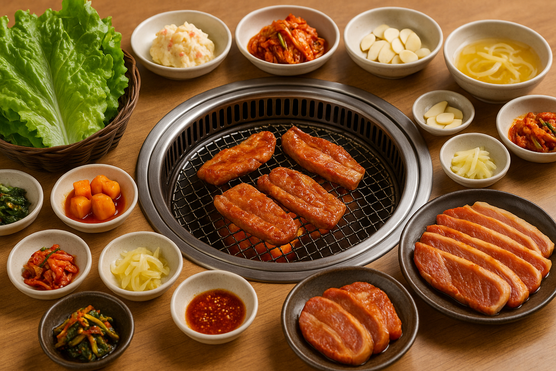
Korean BBQ
- Emphasis on marinated meats (bulgogi, galbi).
- Pork belly (samgyeopsal) is extremely popular.
- Cuts are thicker, often grilled longer.
Seasoning and Sauces
Yakiniku
- Meat is often unseasoned before grilling.
- Served with dipping sauces: tare (sweet soy-based), lemon juice, or salt.
- Allows wagyu’s natural flavor to shine.
Korean BBQ
- Marinated meats are common, packed with garlic, sesame, soy, and chili.
- Dipping sauces include ssamjang (spicy paste) and sesame oil with salt.
Side Dishes and Accompaniments
Yakiniku
Simple accompaniments: rice, kimchi, namul, miso soup. Focus remains on the meat.
Korean BBQ
Large variety of banchan (side dishes) served automatically. Includes kimchi, pickles, seasoned greens, pancakes, and more.
Dining Style
Yakiniku
- Ordered à la carte, usually by cut of meat.
- Smaller portions, designed for sharing but meat-focused.
- Atmosphere: lively but more minimalist compared to Korean BBQ.
Korean BBQ
- Heavier emphasis on side dishes and wrapping meat in lettuce (ssam).
- More communal dining style, with many items on the table at once.
- Atmosphere: festive, louder, often involving soju drinking games.
Drinks
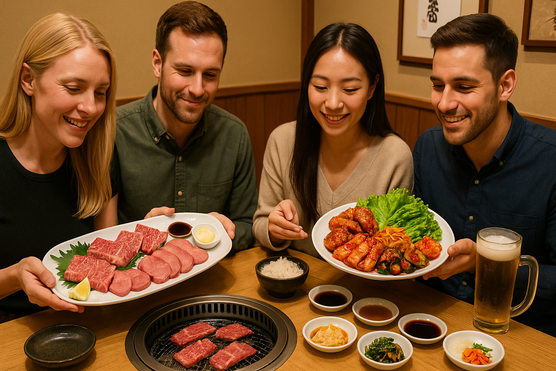
Yakiniku: Beer, highballs, sake, shochu, oolong tea.
Korean BBQ: Soju and makgeolli dominate, alongside beer.
Tips for Travelers
- If you want to try premium wagyu beef, choose yakiniku.
- If you prefer marinated flavors and variety of side dishes, go for Korean BBQ.
- Both are great group activities—don’t go alone unless you’re trying Japan’s new “solo yakiniku” shops.
How Our Service Helps
In Tokyo, some yakiniku restaurants focus on wagyu and require reservations in Japanese. Our service helps travelers secure tables and makes the experience stress-free. We also recommend options if you’d like to compare yakiniku with authentic Korean BBQ in Tokyo.
Conclusion
Yakiniku and Korean BBQ share common roots but offer different dining experiences. Yakiniku emphasizes wagyu beef and simple flavors, while Korean BBQ is about marinades, side dishes, and festive drinking culture. Both are worth trying—but in Japan, yakiniku is the best way to taste world-famous wagyu.
👉 Book a yakiniku restaurant in Tokyo with us and experience Japanese barbecue at its finest.