Sushi Etiquette in Japan: Do’s and Don’ts
Introduction – Why Etiquette Matters in Sushi Dining
Eating sushi in Japan is not just about food—it’s about tradition, respect, and cultural experience. From the way you greet the chef to how you handle chopsticks, etiquette plays a key role in enjoying sushi the right way. This guide explains the essential do’s and don’ts every traveler should know before sitting down at a sushi counter in Japan.
Do: Greet the Chef and Staff
- Start with a polite “Konnichiwa” (hello) or “Onegaishimasu” when being seated.
- Show respect with a smile or nod, even if language is a barrier.
- Thank the chef with “Arigatou gozaimasu” after the meal.
Don’t: Wear Strong Perfume
Sushi is about delicate aromas. Strong scents can ruin the experience for others. Keep it simple: avoid perfume or cologne before dining.
Do: Eat Sushi Immediately
Sushi is served at the perfect temperature. Eat it right away to enjoy the best flavor. Waiting too long is seen as disrespectful to the chef’s craft.
Don’t: Rub Your Chopsticks Together
In casual places, it suggests the chopsticks are cheap. In fine sushi restaurants, it’s considered rude. Simply use them as they are provided.
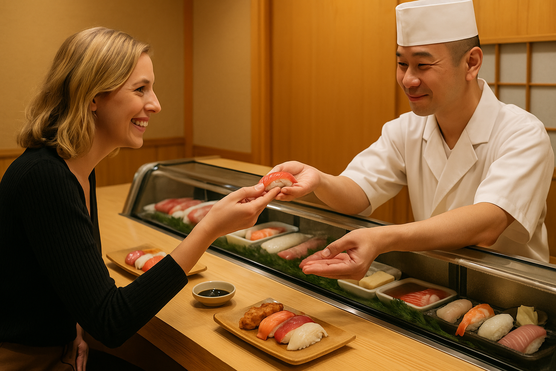
Do: Use Your Hands or Chopsticks
Both are acceptable in Japan. Use hands for nigiri sushi, chopsticks for sashimi. Place sushi gently into your mouth in one bite if possible.
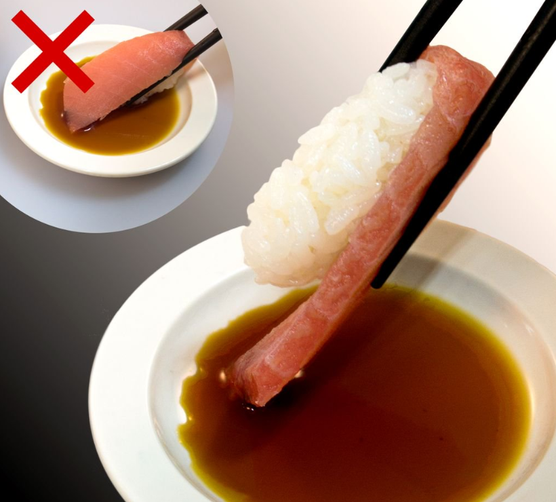
Don’t: Dip Rice Deeply in Soy Sauce
Sushi is meant to be lightly seasoned. Dip the fish side, not the rice side, into soy sauce. Too much soy sauce masks the delicate flavor.
Do: Say “Itadakimasu” Before Eating
This phrase means “I humbly receive.” A cultural way of showing gratitude for the food. At the end, say “Gochisosama deshita” (thank you for the meal).
Don’t: Waste Food
Order only what you can finish. Many sushi counters serve omakase (chef’s choice) meals—trust the chef’s selection.
Do: Follow the Pace of Omakase
Omakase means the chef decides the order. Eat each piece as it comes, without rushing or delaying. Engage politely if the chef explains the fish.
Don’t: Ask for Extra Wasabi (Unless Necessary)
Chefs already balance wasabi in each piece. Adding too much is seen as misunderstanding the craft. If you really dislike wasabi, inform staff beforehand.

Tips for Travelers
- If nervous, start with casual conveyor-belt sushi to practice.
- Watch what locals do and follow along.
- Remember: politeness matters more than perfection.
How Our Service Helps
We help travelers secure sushi reservations and provide guidance on etiquette. This ensures you can enjoy sushi confidently, without worrying about cultural mistakes.
Conclusion
Sushi etiquette is about respect—for the chef, the ingredients, and the tradition. By following these do’s and don’ts, you’ll not only enjoy better sushi but also connect more deeply with Japanese culture.
👉 Ready to try sushi in Japan? Let us help you book your seat at a sushi counter in Tokyo.