Takayama in Winter: Snow Travel Guide, What to Expect & Practical Tips

Visiting Takayama in winter can be one of the most memorable ways to experience central Japan. Snow softens the old town streets, warm food becomes even more satisfying, and the whole city feels quieter and more atmospheric than in peak foliage season.
At the same time, winter travel in Takayama is not just about beautiful scenery. Snow, low temperatures, early sunsets, and transport timing all affect how you should plan your days. This guide covers both sides: the best winter experiences in Takayama and the practical details that make the trip smoother.
Quick Summary (For Busy Travelers)
Best for: travelers who like quiet streets, winter scenery, and warm local food.
Winter highlights: snow-covered old town, Hida Folk Village, hot meals, Shirakawa-go day trip.
Most important practical tip: wear proper winter shoes and plan transport early.
Best trip style: 1–2 nights rather than a rushed stopover.
Good match: winter Takayama works especially well with ryokan stays and food-focused travel.
If you are planning your overall route first, start here: 2-Day Takayama Itinerary →
1) What Winter Is Really Like in Takayama
Takayama is not “light winter” Japan. It is a mountain city, and winter changes the travel rhythm noticeably. Streets can be snowy or wet, temperatures feel sharper in the morning and after sunset, and walking takes a little longer than you might expect.
The reward is atmosphere. Traditional streets look more dramatic under snow, steam rising from food feels more inviting, and indoor stops—ramen shops, cafés, ryokan lounges—become part of the experience rather than just a break.
In other words, winter in Takayama is best for travelers who enjoy slow, mood-rich travel rather than trying to cram in too many stops.
2) Best Things to Do in Takayama in Winter
Walk the Old Town in the Morning
Takayama’s old town is beautiful year-round, but winter mornings are especially rewarding. The streets are quieter, the wooden buildings look more dramatic with snow, and the cold air makes the town feel even more historic.
If you want photographs without heavy daytime foot traffic, winter morning is one of the best moments to walk Sanmachi Suji.
Visit the Morning Market
The morning market is still worth visiting in winter because it adds local texture to the day. Even when the weather is cold, it helps break up your schedule with snacks, simple browsing, and a more local rhythm than major city sightseeing.
See Hida Folk Village in the Snow
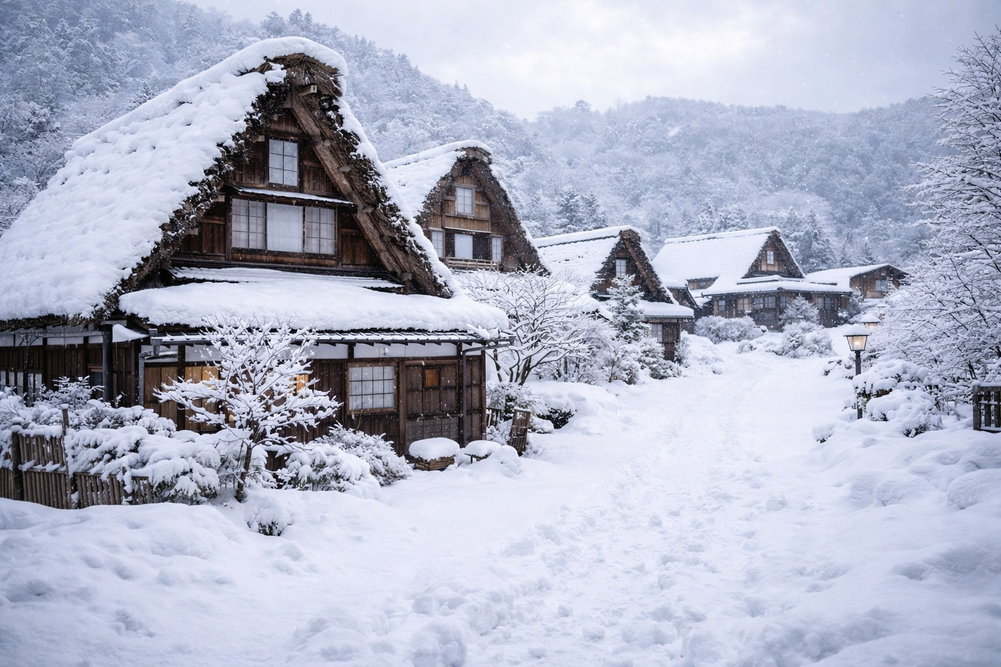
Hida Folk Village becomes especially photogenic in winter. Traditional houses, snow-covered roofs, and muted seasonal colors make it feel more atmospheric than in warmer months. This is one of the best winter-specific sightseeing additions if you want something beyond the old town.
Use Food as Part of the Winter Experience
Winter is one of the best times to make food a central part of your Takayama trip. Warm ramen, comforting local dishes, and richer dinners feel more satisfying after time outside in the cold.
If ramen is part of your winter plan, use this shortlist: Best Takayama Ramen Shops →
If you are planning a premium winter dinner, start here: Best Hida Beef Restaurants in Takayama →
3) Shirakawa-go in Winter: Is It Worth Adding?
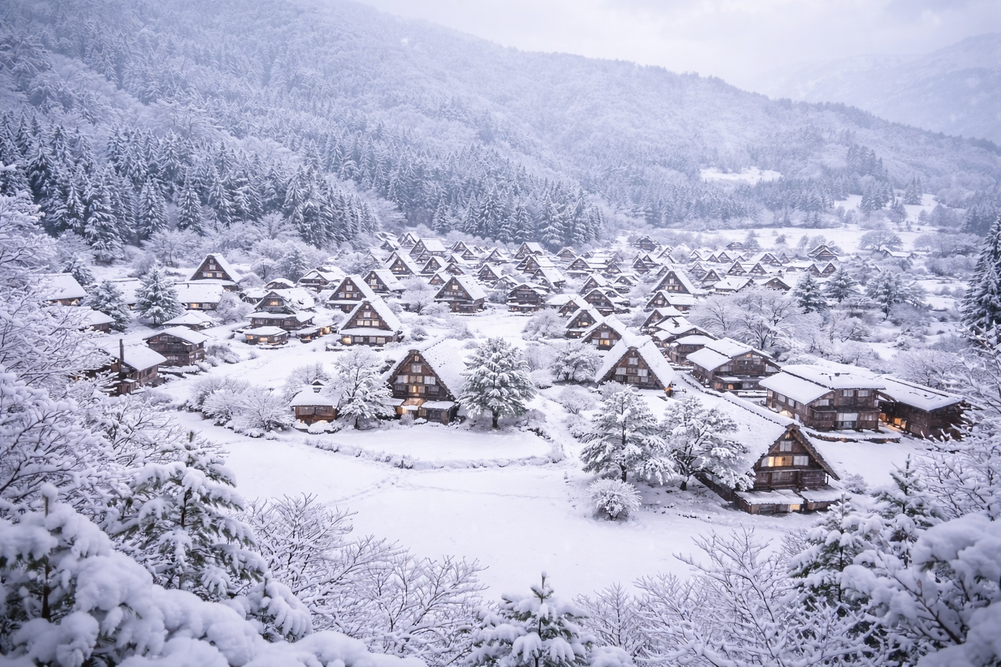
Yes—if you plan it properly. Shirakawa-go in winter is visually spectacular, and many travelers pair it with Takayama because the transport is straightforward. But winter also makes timing more important. Snow conditions, popular dates, and bus availability all matter more than they do in milder seasons.
Winter Shirakawa-go works best as a planned half-day trip, not an impulsive add-on. If your bus timing is fixed and your shoes are appropriate for snowy paths, it can easily become one of the highlights of the trip.
For the full transport and route guide, use: Shirakawa-go Day Trip from Takayama →
4) Where to Stay in Takayama in Winter
Winter makes accommodation choice more important than in other seasons. A place that feels “walkable enough” in spring may feel less convenient when sidewalks are snowy and sunset comes early.
If you prioritize convenience, staying near Takayama Station can make bus travel, luggage handling, and winter walking easier. If you prioritize atmosphere, staying closer to the Old Town creates a more immersive winter experience—especially for early morning and evening walks.
Winter is also one of the best times to justify a ryokan stay. After a day in the cold, the comfort of a warm traditional room or a more restorative hotel experience feels especially worthwhile.
For area-by-area accommodation advice, see: Where to Stay in Takayama →
5) What to Wear in Takayama in Winter
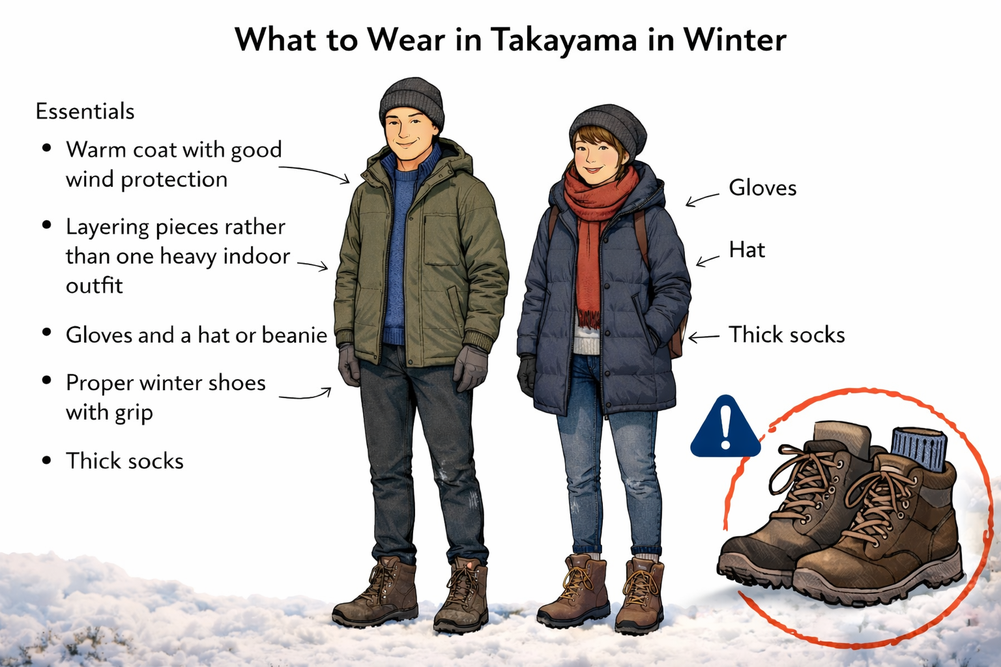
Packing correctly matters more here than in many other Japanese destinations. You do not need extreme expedition gear, but you do need a winter setup that works for walking on cold, sometimes snowy surfaces.
Essentials
- Warm coat with good wind protection
- Layering pieces rather than one heavy indoor outfit
- Gloves and a hat or beanie
- Proper winter shoes with grip
- Thick socks
What matters most
Shoes matter more than almost anything else. Even a beautiful itinerary becomes tiring if your feet are cold or you are constantly worried about slipping. In winter Takayama, stability and comfort are more important than fashion.
6) Winter Safety & Practical Travel Tips
- Start earlier: winter daylight feels shorter, even when your total sightseeing list is small.
- Build buffer time: snow and cold slow walking pace.
- Don’t overpack each day: winter layers, gloves, and snacks add bulk.
- Use indoor stops strategically: cafés, ramen shops, museums, and shops help regulate energy.
- Check transport before the day starts: especially for side trips and return timing.
The common winter mistake is not “going to the wrong places.” It is trying to keep a non-winter pace in a winter setting. Takayama rewards travelers who slow down slightly and plan more intentionally.

7) Is Winter a Good Time to Visit Takayama?
Yes—especially if you value atmosphere, seasonal food, and slower travel more than pure sightseeing efficiency. Winter Takayama is not the easiest version of the city, but it may be the most memorable.
If your ideal trip includes snowy streets, warm local meals, a possible Shirakawa-go side trip, and a comfortable place to stay at night, winter is one of the strongest seasons to visit.
Summary
Takayama in winter works best when you combine beauty with practicality: enjoy the old town, use food as part of the seasonal experience, plan Shirakawa-go carefully, choose your accommodation with winter walking in mind, and wear proper footwear.
Done well, winter in Takayama feels less like “checking off attractions” and more like stepping into a quieter, more atmospheric version of Japan.