Tokyo Itinerary for First-Time Visitors: 3–5 Day Plan with Easy Routes & Travel Strategy

Planning a first Tokyo trip is exciting, but it can also feel strangely difficult. The city is one of the most famous destinations in the world, yet many visitors struggle to turn that excitement into a route that actually works. There are too many well-known neighborhoods, too many transport options, and too many lists of “must-see” places that ignore how long it takes to move between them.
The biggest mistake most first-time visitors make is not choosing the wrong attractions. It is building a plan that looks good on paper but feels exhausting in real life. Tokyo rewards travelers who think in area groups, not in random attraction lists. Once you group neighborhoods geographically and understand which train system tends to fit each day, the city becomes far easier to enjoy.
This itinerary is designed around that idea. Instead of trying to cover everything, it organizes Tokyo into practical daily zones: a western side day, an eastern side day, a central Tokyo day, and then optional extension days depending on how much time you have. That structure is not arbitrary. It reflects a very common and realistic way first-time visitors explore the city.
You also do not need to master Tokyo transport before you go. Most tourists end up using both JR and Metro — the key is knowing when. If you want a clear explanation of how those systems work together before you lock in your plan, read this first: Tokyo Metro vs. JR →
The goal of this article is simple: help you build a 3-day, 4-day, or 5-day Tokyo trip that feels coherent, realistic, and enjoyable. It is written for first-time visitors who want the famous highlights, but who also want a route that respects geography, energy, and transport logic.
Quick Itinerary Overview
Day 1: Shinjuku → Harajuku → Shibuya
Day 2: Asakusa → Ueno → Akihabara
Day 3: Tsukiji → Ginza → Roppongi
Day 4: Optional extension day inside Tokyo or a separate destination elsewhere in Japan
Day 5: Flexible day for shopping, repeats, cafés, neighborhoods, or recovery time
If you only have 3 days, follow Days 1 to 3. If you have 4 days, add the optional extension day. If you have 5 days, add both the extension day and the flexible buffer day.
This structure is intentionally conservative. It is designed to reduce inefficient zig-zagging and to give each day a distinct character: modern west Tokyo, traditional and cultural east Tokyo, more polished central Tokyo, and then optional space for either a deeper city experience or a separate destination elsewhere in Japan.
Day 1: Shinjuku → Harajuku → Shibuya
Day 1 is the easiest place to start because it gives you an immediate sense of Tokyo’s scale while remaining logistically simple. This west-side route is one of the most common first-timer patterns because the neighborhoods are major highlights, the transport is straightforward, and the contrast between them is strong. You get skyscraper Tokyo, green and spiritual Tokyo, youth culture Tokyo, and iconic urban Tokyo in one day.
Start in Shinjuku
Shinjuku is one of the best introduction points to Tokyo because it shows you, immediately, that this is not a city you should try to “finish.” It is dense, vertical, and energetic. Beginning here creates the right psychological baseline for the trip.
For many first-time visitors, the Tokyo Metropolitan Government Building observation deck is a smart first stop. It is not only about the view. It helps you understand the scale of the city and gives structure to the rest of your itinerary. Once you have looked out over Tokyo from above, the neighborhoods later in the trip feel more connected and less abstract.
Shinjuku also works well in the morning because it is a transport hub that is easy to access from many hotel areas. Starting somewhere logistically convenient on Day 1 is valuable, especially when you are still adjusting to the city.
Beyond the observation deck, Shinjuku also teaches an important lesson about Tokyo travel: the city is best experienced in layers. A huge station zone, department stores, business towers, side streets, and green pockets all exist next to one another. That density is part of the appeal. You do not need to “do all of Shinjuku.” You only need enough time to absorb the feeling of it.
If you want a more relaxed start, you can also use a short walk through a quieter area or café break before moving on. That helps prevent the first day from turning into a nonstop highlight sprint.
Move to Harajuku before lunch
After Shinjuku, move to Harajuku. This is where the day begins to show Tokyo’s internal contrasts. The strongest Harajuku pattern for first-time visitors is not just “go shopping.” It is to pair Meiji Shrine with Takeshita Street and the surrounding youth-culture atmosphere. That combination works because it lets you feel two completely different moods within a short distance.
Meiji Shrine gives the day breathing space. It is one of the easiest places to experience the surprising calm that still exists inside Tokyo. Then, just outside that atmosphere, Harajuku flips into something much more playful and energetic. That contrast is one of the reasons this west-side route is so effective for a first trip.
It also works well from a pacing perspective. Shinjuku can feel intense. Harajuku resets the day before you move into another high-energy district.
Harajuku is also useful because it introduces a type of Tokyo sightseeing that differs from monumental tourism. You are not just visiting a landmark. You are observing how a district feels, how people move through it, and how identity changes from one street to the next. That kind of experience becomes more important as the trip continues.
Walk or ride into Shibuya in the afternoon
Shibuya is a natural finish because it provides the most famous “modern Tokyo” image many first-time visitors are looking for: the scramble crossing, the screens, the movement, the layered streets, and the sense of organized chaos.
The key reason this sequence works geographically is that Shinjuku, Harajuku, and Shibuya align extremely well for a first-day route. They are connected in a way that feels intuitive rather than forced, and they are especially easy to understand if you are using JR. This is exactly the kind of day where Tokyo feels manageable rather than intimidating.
If you still have energy, this is also the day when an evening view stop such as Shibuya Sky can make sense. But it should be treated as optional, not required. Day 1 should feel exciting, not exhausting.
From a traveler’s point of view, this route succeeds because each stop adds something distinct. Shinjuku gives scale, Harajuku gives contrast, and Shibuya gives iconic energy. That is a very strong opening day for a first Tokyo itinerary.
Day 2: Asakusa → Ueno → Akihabara

Day 2 shifts to east Tokyo, where the mood changes significantly. This is the day when many travelers feel that Tokyo becomes more layered. Instead of high-rise west-side energy, you get a sequence that blends traditional atmosphere, museum-and-park culture, and modern subculture.
Start early in Asakusa
Asakusa is strongest in the morning. That is not because it becomes “bad” later, but because earlier hours make it easier to appreciate the temple atmosphere and the surrounding streets with a little more space and less crowd pressure. For a first-time route, that matters.
Senso-ji is the main anchor here, but the larger value of Asakusa is the way it introduces a more traditional side of Tokyo without feeling remote or difficult. It is one of the clearest examples of how Tokyo can hold very different identities at once.
This is also a good place to slow down a little. Unlike Day 1, which is about energy and introduction, Day 2 begins with a more grounded rhythm. That contrast helps the itinerary feel balanced over multiple days.
Many visitors also find that Asakusa helps them understand Tokyo historically, not only visually. The area suggests continuity with older urban life in a way that feels more immediate than simply reading about the city’s history beforehand.
Continue to Ueno
Ueno is a highly practical midpoint because it gives the day a different texture without breaking the east-side logic. Ueno Park, museums, and the broader station-area environment make it a useful “reset zone” between Asakusa and Akihabara.
The value of Ueno is not only in individual attractions. It is in the way it supports the day structurally. After a temple-and-traditional start in Asakusa, Ueno gives you breathing room. You can walk, rest, eat, and decide whether you want to lean more toward culture, casual shopping, or simply a less intense midday pace.
This is why Ueno appears in many first-timer itineraries paired with Asakusa. The pairing is not random. It works because both the geography and the pacing make sense.
If you are the kind of traveler who likes museums, this is an especially useful point to customize the day. If you are not, Ueno still works as a park-and-neighborhood stop. That flexibility makes it a good middle anchor.
Finish in Akihabara
Akihabara is the right place to end the day because it is more stimulating and more specific in character than Ueno. By putting it later, you arrive with a clearer sense of what kind of Tokyo contrast you are seeing. Rather than feeling like “just another neighborhood,” Akihabara lands as a deliberate shift into electronics, gaming, anime, and subculture space.
It is also strategically smart to place Akihabara later because it is easier to shorten or extend depending on your interest level. Some travelers want only a quick look. Others want to spend a long time. That flexibility makes it a good afternoon stop.
Even if you are not deeply interested in anime or electronics culture, Akihabara still works as a Tokyo experience because it reveals another way the city organizes identity around district-level specialization. For many first-time visitors, that alone makes it worthwhile.
Why this day is realistic
Asakusa–Ueno is already a well-established east Tokyo pattern, and Asakusa–Ueno–Akihabara is a very plausible extension for visitors who want both traditional and modern culture in one day. It works because the areas are all on the broader eastern side of the city and can be connected without the awkward cross-city jumps that make itineraries feel scattered.
If you want help judging whether JR or Metro is better on a day like this, use: Tokyo Metro vs. JR →
Day 3: Tsukiji → Ginza → Roppongi

Day 3 is where the itinerary moves into a more polished, central-Tokyo rhythm. This day works best if you think of it as a contrast to Day 2. Instead of temple atmosphere, park space, and subculture intensity, you get food, clean urban sophistication, shopping, and a more adult Tokyo mood.
Start with Tsukiji in the morning
Tsukiji is strongest when treated as a morning food area rather than as a generic “go sometime” district. Starting here makes the day feel anchored. It also gives you an easy sensory beginning: food, movement, small lanes, and a very Tokyo-specific urban texture.
You do not need to overcomplicate Tsukiji. The value is in seeing the area while it still feels like a morning destination and using it as a soft launch into central Tokyo.
For food-oriented travelers, this is also one of the few days in the itinerary where the morning meal can become part of the attraction rather than just an interruption between attractions.
Move into Ginza for the middle of the day
Ginza is one of the most logical next steps after Tsukiji because the two areas are closely connected in both geography and travel logic. This is a strong example of a route that looks “obvious” only after someone points it out. Once you see the pairing, it becomes clear why it is commonly used.
Ginza works best in the late morning and afternoon, when you can experience its cleaner, more upscale urban atmosphere without trying to force it into the start or end of a long city-crossing day. It is also where the itinerary becomes more flexible. Some travelers want shopping. Others want cafés, architecture, or simply the shift in atmosphere from the first two days.
Another advantage of Ginza on Day 3 is that it teaches you a different rhythm of Tokyo. This is not youth-culture Tokyo or temple Tokyo. It is polished, deliberate, and spatially composed in another way. That keeps the itinerary from becoming repetitive.
Finish in Roppongi
Roppongi works well as the evening side of the day because it supports museums, skyline views, and a more nightlife-adjacent urban atmosphere. Whether you focus on art, architecture, or night views, the area creates a distinct finish that feels different from both west Tokyo and east Tokyo.
This day is also a good reminder that Tokyo is not just about “famous places.” It is about city textures. Tsukiji, Ginza, and Roppongi make sense together not only because of physical distance but because they create a coherent emotional arc: lively food start, polished daytime middle, more sophisticated urban finish.
For many travelers, Day 3 is the point when Tokyo begins to feel less like a collection of separate districts and more like a city with multiple overlapping personalities. That makes it an especially valuable day in the itinerary.
Why this day is realistic
Tsukiji–Ginza is a recognized and practical pair in many Tokyo walking and sightseeing guides, and extending that logic into Roppongi gives the day a sensible central-city progression. This is also the kind of day where Metro often becomes more useful than JR, because the neighborhood-to-neighborhood access matters more than big-hub movement.
Day 4: Optional Extension Day
Once you have completed the first three days, you have already covered a very strong first-timer Tokyo structure. Day 4 should therefore be treated as an extension day, not as a day you “must” fill with another giant checklist.
There are two smart ways to use this day.
Option A: Stay inside Tokyo and go deeper
If you feel that the first three days gave you the headline version of Tokyo, Day 4 can be used to explore more selectively. This is a good moment for neighborhoods with a slower or more local-feeling pace, for a museum-heavy day, or for revisiting an area you liked but moved through too quickly.
The exact destination matters less than the principle. Day 4 inside Tokyo should usually be a depth day, not another broad-scope day. By now, you have already proven that you can move around the city. The value now is choosing one kind of experience and giving it more time.
This is also the day when niche interests can start to shape the route more strongly. Architecture, shopping, design, parks, bookstores, specific museums, food districts, and café culture all become more practical once the main first-timer structure is already complete.
Option B: Add a separate destination elsewhere in Japan
If you have more time in Japan, this is also the moment when it makes sense to look beyond Tokyo. Importantly, this should be framed as a separate destination, not as a rushed day excursion unless the destination is genuinely suited to that format.
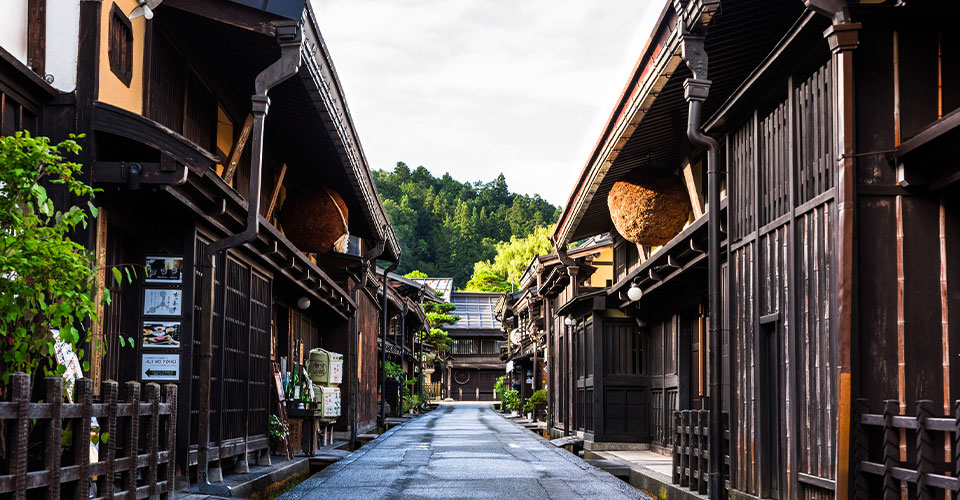
That is where a place like Takayama becomes interesting. Takayama is not something you casually squeeze into a Tokyo sightseeing day. It works because it offers a different side of Japan: slower pace, traditional streets, local food identity, and a much stronger sense of regional atmosphere. In strategic terms, it complements Tokyo rather than competing with it.
If you are considering adding a destination beyond Tokyo, Takayama offers a completely different experience with traditional streets, local food, and a slower travel pace. 2-Day Takayama (Gifu, Hida) Itinerary →
That framing matters. A strong Japan itinerary is not about proving you can cover the most ground. It is about choosing destinations that add something meaningfully different to the trip.
For travelers who are staying in Japan beyond Tokyo, this is often where itinerary quality improves dramatically: not by adding one more Tokyo mega-day, but by allowing another destination to contribute a different tempo and atmosphere.
Day 5: Flexible / Buffer Day
If you have a fifth day, treat it as a flexible day rather than another rigid sightseeing structure. This is one of the most useful itinerary decisions you can make.
Why? Because Tokyo is a city where plans often improve once you have already spent several days inside it. By Day 5, you know whether you want more shopping, another major neighborhood, a calmer café day, or a second pass through an area that felt rushed earlier. You also know how your energy level is holding up.
This is why a flexible day is more valuable than it first sounds. It protects the earlier days from becoming overloaded and gives you room to personalize the trip after Tokyo is no longer abstract. For some travelers, Day 5 becomes their favorite day precisely because it feels less like “doing Tokyo correctly” and more like actually inhabiting the city at their own pace.
Practical uses for Day 5 include:
- returning to the neighborhood you enjoyed most
- shopping without trying to combine it with heavy sightseeing
- using a slower café or museum day to recover energy
- making room for weather changes or fatigue
- keeping the schedule open before an onward journey
It is often tempting to fill every day with one more famous place. Resist that impulse unless there is a genuinely strong reason. Tokyo rarely rewards the most crowded plan.
Seen another way, Day 5 is what gives the itinerary maturity. Instead of pretending every traveler wants the same fixed five-day route, it acknowledges that by this point your own preferences should start shaping the trip.
How to Move Between These Areas
The transport logic of this itinerary is one of its main strengths. Day 1 is highly JR-friendly. Day 2 often becomes a mixed JR-and-Metro day depending on your exact route choices. Day 3 is where Metro often starts to make more sense for finer central-city access.
This is exactly why trying to choose a single “best” transport system for Tokyo is less useful than understanding which system fits which day. The itinerary works because it aligns neighborhoods with transport logic instead of fighting it.
For the full transport decision guide, use: Tokyo Metro vs. JR →
For the broader Japan transport hub, use: Transportation in Japan: The Complete Guide →
The practical lesson is not that you need to become an expert in train operators. It is that good area grouping makes transport simpler. When the day is designed well, the trains start to feel like support rather than a problem.
Common Tokyo Itinerary Mistakes to Avoid
One of the biggest mistakes is trying to cover west Tokyo and east Tokyo aggressively on the same day without a strong reason. It may look efficient on a list, but it usually feels fragmented in practice.
Another mistake is underestimating the value of neighborhood time. Tokyo is not only about landmarks. The feeling of moving through an area matters. If you reduce every district to a 20-minute box to tick, the city becomes less interesting.
A third mistake is over-optimizing transport before you understand the route. Choose the day structure first. Then choose the train strategy that supports it.
A fourth mistake is treating every additional day as a mandate for one more huge attraction cluster. Extra days are often more valuable when used for depth, flexibility, or a separate destination rather than another overloaded Tokyo marathon.
A fifth mistake is forgetting that fatigue changes how attractive routes feel. A plan that looks perfectly reasonable in the abstract can feel much harder if it has too many late-day transfers or too little downtime.
My Practical Recommendation for First-Time Visitors
If this is your first time in Tokyo, follow the first three days almost exactly. They give you a very strong introduction to the city without forcing unreasonable movement. If you have a fourth day, go deeper rather than wider, or use it to position Tokyo within a larger Japan trip. If you have a fifth day, keep it flexible.
Most importantly, do not judge the quality of the trip by how many famous names you fit in. Judge it by whether each day feels coherent. In Tokyo, coherent days are memorable days.
That is the real purpose of itinerary design. It is not to make Tokyo smaller than it is. It is to make Tokyo readable enough that you can enjoy its scale instead of being overwhelmed by it.
Summary
The best first-time Tokyo itinerary is not the one with the longest list of attractions. It is the one with the strongest route logic. A west-side day built around Shinjuku, Harajuku, and Shibuya; an east-side day built around Asakusa, Ueno, and Akihabara; and a central Tokyo day built around Tsukiji, Ginza, and Roppongi create a realistic, balanced structure that many travelers can actually enjoy.
Once that structure is in place, extra days become much easier to use well. That is the real goal of itinerary design: not to make Tokyo smaller, but to make it more readable.