Tokyo Metro vs. JR: Which Should You Use as a Tourist?
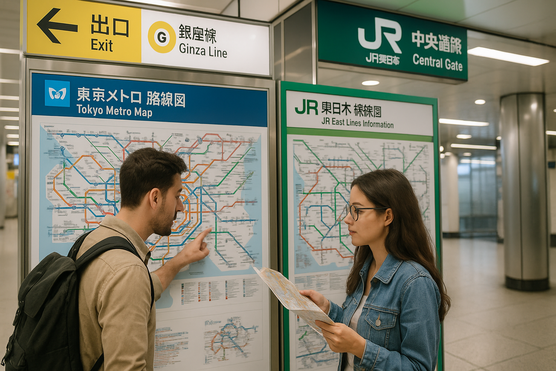
If you are planning your first trip to Tokyo, one of the most confusing transport questions is whether you should use Tokyo Metro or JR. On the surface, the answer sounds simple: both are trains, both move around the city, and both appear together on route-search apps. But once you start looking at actual stations, route maps, ticket options, and different sightseeing neighborhoods, the question becomes much less obvious.
The good news is that you do not need to “pick one system” and commit to it for your entire trip. In practice, most tourists use both. The real decision is not which one is universally better. The real decision is how to use each system effectively depending on where you are going, what kind of trip you want, and how much complexity you are willing to handle.
That distinction matters because Tokyo is not one of those cities where a single transport network cleanly solves everything. JR is excellent for linking major hubs and for making simple, readable moves between famous areas. Tokyo Metro is excellent for finer access inside the city, especially once you leave the most obvious JR corridors. Sometimes one is clearly the better choice. Very often, the smartest route uses both.
This guide is designed for tourists who want a practical answer rather than a technical explanation. It will show you when JR is easier, when Metro is more useful, how travelers actually combine them, what ticket strategy usually makes sense, and what common mistakes make Tokyo transport feel harder than it really is. The goal is not to turn you into a rail expert. The goal is to help you move around Tokyo with less stress and better judgment.
Quick Answer (For Busy Travelers)
Use JR when you are moving between major hubs like Shinjuku, Shibuya, Tokyo Station, and Ueno.
Use Tokyo Metro when you need more precise access to central neighborhoods such as Asakusa, Ginza, or Roppongi.
Use both when your day mixes major hubs with neighborhoods that are not most convenient on JR alone.
Best ticket strategy for most tourists: use an IC card and choose routes based on convenience rather than forcing one system.
Simple rule: JR is usually easier for broad cross-city moves; Metro is usually better for finer urban access.
If you want the broader transport hub article first, start here: Transportation in Japan: The Complete Guide →
What Is JR?
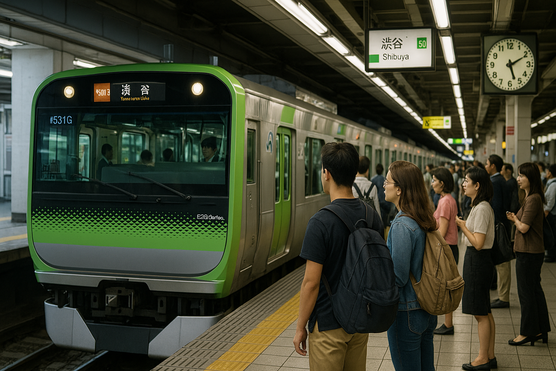
In Tokyo travel conversations, “JR” usually refers to the JR East rail network that includes major urban train lines such as the Yamanote Line, the Chuo Line, the Keihin-Tohoku Line, and others. For tourists, the most famous is the Yamanote Line because it links several of Tokyo’s best-known hubs in an easy-to-understand loop.
The reason JR feels easier to many first-time visitors is not that it is objectively simpler in every situation. It is that JR often matches how tourists mentally picture Tokyo. If you want to move between big-name areas like Shinjuku, Shibuya, Ueno, Ikebukuro, or Tokyo Station, JR often gives you a clean and recognizable route. When you look at a map, the Yamanote Line in particular creates a readable structure: a loop connecting major centers rather than a dense web of smaller station choices.
This is why travelers often feel comfortable with JR very quickly. Even when a Metro route might be slightly faster in theory, JR may still feel easier because the station names are familiar, the route logic is visible, and the line structure feels less fragmented. That comfort matters more than many people realize, especially during a first trip.
What Is Tokyo Metro?
Tokyo Metro is one of Tokyo’s subway operators and runs a dense urban network that reaches many central areas more directly than JR. In practical tourist terms, Metro is what often gets you closer to where you actually want to be once you move beyond the biggest JR hubs.
This is where beginners sometimes get intimidated. Metro maps look dense, station names can feel less familiar, and route options may seem more complicated. But that apparent complexity is also Metro’s main strength. It serves the city at a finer grain. If JR gives you a broad structure, Metro gives you detail.
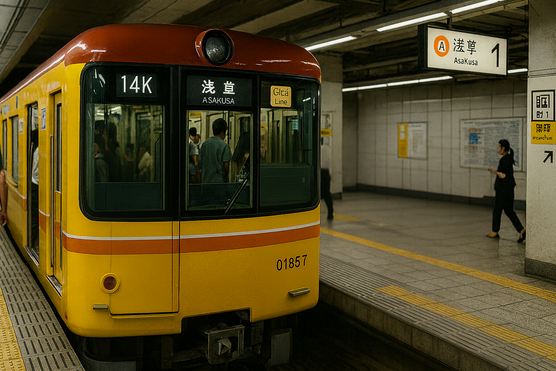
That makes Metro especially useful for neighborhoods where the exact station matters. In areas like Ginza, Asakusa, or Roppongi, the difference between “arriving at a big hub nearby” and “arriving close to the actual destination” can be meaningful. Metro is often what closes that gap.
In other words, Metro is not better because it is more local or more urban. It is better when your destination is better served by the subway grid than by the JR network. Once you understand that, the system becomes much less confusing.
How Tourists Actually Use JR and Metro Together
The most useful way to think about JR and Metro is not as competing systems but as two layers of movement. JR is often the big-frame network. It is excellent for reaching major hubs and making broad moves across Tokyo. Metro is often the fine-access network. It becomes valuable when you need to reach a destination more precisely inside central Tokyo.
A lot of route confusion disappears once you accept that most real sightseeing days do not belong exclusively to one system. Tourists often start the morning in one type of area, move to another that is better served by a different operator, then return through a major hub later in the day. This mixed pattern is normal.
Example 1: A day where JR usually feels easiest
Imagine a day built around Shinjuku, Shibuya, and Ueno. That is a very JR-friendly sightseeing pattern. These are major urban nodes, and the Yamanote Line gives the day a structure that is easy to read. Even if there are alternative routes, JR often wins because the logic is straightforward. You spend less effort interpreting the system and more effort enjoying the day.
This is one reason many first-time visitors like JR so much. On days where the destinations line up with major JR hubs, the network feels intuitive. You can think in terms of big destinations rather than small access points.
Example 2: A day where Metro often makes more sense
Now imagine a day built around Asakusa, Ginza, and Roppongi. This is much more Metro-shaped. These destinations sit inside central Tokyo in a way that often favors the subway grid over the JR network. If you try to force JR into a day like this, you may find yourself making indirect moves, walking longer from stations, or using major hubs that do not really match the day’s flow.
In this kind of scenario, Metro is not better because JR is bad. Metro is better because the destinations are distributed in a way that the subway network handles more naturally.
Example 3: A day where combining both is smartest
Consider Shinjuku and Asakusa. Many tourists try to solve this by asking, “Should I use JR or Metro?” But this is often the wrong question. The better question is, “What route is simplest and most useful?” Sometimes that means taking JR to a major transfer point and then switching to Metro. Sometimes it means a mostly Metro solution. The exact route matters less than the principle: you should use the combination that gives you the cleanest experience, not the one that proves loyalty to one network.
This is also where route apps become much more helpful once you stop treating them like a system loyalty test. If Google Maps or another route app suggests a mixed JR-and-Metro route, that is not a sign that Tokyo is impossibly complicated. It is often a sign that the city’s transport network is doing exactly what it is supposed to do.
The practical takeaway is simple: use JR for the big framework, use Metro for detail, and use both whenever the route clearly benefits from both. Most tourists eventually discover this through trial and error. Learning it early makes Tokyo much easier.
When You Should Use JR
JR is strongest when your day is built around major Tokyo hubs. This is especially true if your itinerary includes areas such as Shinjuku, Shibuya, Ueno, Ikebukuro, or Tokyo Station. These are places where JR does not just provide access; it provides structure.
The Yamanote Line is the clearest example. For tourists, it acts like a readable urban spine. Because it loops through major centers, it makes Tokyo feel less like a maze and more like a connected set of large districts. That psychological simplicity is a real advantage.
JR is also a good choice when:
- you want the easiest route between major sightseeing hubs
- you prefer fewer decisions and more recognizable station names
- your hotel is near a major JR station
- you are moving to or from Tokyo Station for intercity travel
Another underrated JR advantage is transfer confidence. Some tourists feel more comfortable transferring within the JR world than between multiple subway lines with denser naming and more exits. That does not make Metro inferior. It just means that confidence and readability are part of the real travel equation.
In practical terms, JR is often the right answer when you want a route that is not only functional but also mentally light. Tokyo can be tiring. Reducing decision friction is valuable.
When Metro Is the Better Choice
Metro becomes the better choice when your destination is more specific, more central, or less naturally aligned with the main JR structure. This is especially true in areas such as Asakusa, Ginza, Tsukiji, and Roppongi, where the subway often gets you closer and with less awkward routing.
Tourists sometimes resist Metro at first because it looks denser on the map, but this is usually because they are thinking in “major hub” terms. Once your day shifts from “big-area hopping” to “I want to reach this part of the city accurately,” Metro often becomes the more useful tool.
Metro is especially strong when:
- your destinations are concentrated in central Tokyo neighborhoods rather than JR hubs
- you want more precise arrival points with shorter final walks
- you are sightseeing in areas where the subway grid is naturally denser than JR coverage
- your day is built around a cluster of places that are geographically close but not ideally linked by JR alone
Another practical point is that Metro can make Tokyo feel smaller once you are operating inside the city center. JR often solves the larger movement problem. Metro solves the “last meaningful urban layer” problem. That is why tourists who become more comfortable in Tokyo often find themselves using Metro more confidently after the first day or two.
Real-World Route Patterns Tourists Commonly Face
Here is a practical way to think about common sightseeing days.
If you are building a day around Shibuya, Shinjuku, and Harajuku, JR often feels almost tailor-made. The distances between those major hubs fit the system naturally, and the day remains readable even for travelers who are still nervous about Tokyo’s scale.
If your day is centered on Asakusa, Ueno, and Ginza, the answer becomes more mixed. Ueno is comfortable on JR, but Asakusa and Ginza often pull you toward Metro for cleaner urban access. In that kind of day, trying to force only one operator can actually increase complexity rather than reduce it.
If your day includes Tokyo Station in the morning, then Akihabara, then a more central area such as Ginza or Marunouchi-side movement, the route may shift more than once. That is not a failure of planning. It is simply how Tokyo works. A good tourist strategy does not eliminate all switching. It eliminates unnecessary switching.
Another useful way to judge a route is to ask which station you actually want to emerge from. Tourists sometimes think only in line names and travel times. But arrival quality matters. Coming out in the right part of the city with a short final walk can be better than a technically faster ride that leaves you at a less useful point. This is one reason Metro often outperforms JR in dense central areas.
Quick Route Pattern Summary
Cost & Ticket Strategy (IC Cards vs Passes)
Ticket strategy is where many tourists overcomplicate Tokyo transport. People often assume they need to optimize every ride with the perfect pass. In reality, the simplest option is usually the best one.
For most tourists, an IC card is the easiest answer
If your priority is simplicity, flexibility, and low stress, an IC card is usually the best choice. It works well because it lets you use the route that makes the most sense in the moment without forcing your day into one operator’s system. That matters in Tokyo, where the smartest route often changes depending on the neighborhood, transfer point, or sightseeing pattern.
An IC card is especially strong if:
- you are staying several days and want flexibility
- you do not want to calculate which pass is worth it every day
- your itinerary mixes JR and Metro regularly
Subway passes can help, but only in the right pattern
A subway pass can be useful on days that are heavily centered on Tokyo Metro and Toei Subway usage. But this is exactly where tourists can make a planning mistake. A pass only saves money when your route actually fits the pass. If you start forcing your sightseeing day to match the pass, rather than using the best route, the convenience cost can outweigh the money saved.
For example, a subway pass may be reasonable on a day built around central Tokyo neighborhoods with several short subway rides. It becomes less attractive if your day naturally wants JR movement, airport transfer logic, or a mixed route that crosses operator boundaries. A pass should support the day. It should not control it.
JR Pass and Tokyo-only travel
If your trip is focused mainly on central Tokyo, an IC card is usually the simplest option, and a subway pass may be useful on Metro-heavy days. A JR Pass is typically more valuable when your itinerary includes long-distance travel beyond Tokyo, rather than short urban rides alone.
If you want a detailed breakdown of when the Japan Rail Pass is actually worth using, see: How to Use the Japan Rail Pass Effectively in Tokyo and Beyond →
The key ticket lesson is this: do not let ticket logic distort route logic. Choose the pass only when it genuinely supports how you want to move around the city.
Quick Ticket Strategy Summary
- IC card: best for most tourists because it works across different operators and keeps your route flexible.
- Subway pass: useful only when your day is heavily centered on Metro / subway travel.
- JR Pass: usually more valuable for intercity travel than for short Tokyo-only rides.
How to Read Google Maps for Trains in Tokyo
For many tourists, Google Maps becomes the real interface for Tokyo transport. That is fine. You do not need to memorize the full network. But you do need to read route suggestions in the right way.
The first thing to understand is that route apps are not asking you to choose a transport identity. They are showing you the most useful route they can find. If the route uses JR first and then Metro, that is not a contradiction. It is often the correct solution.
The second thing to understand is that transfers are normal. Beginners often overreact to any route that includes one transfer, as if “no transfers” automatically means “better.” In Tokyo, that is not necessarily true. A clean route with one sensible transfer may be easier and faster than a more awkward one-operator route.
The third thing is to look at the route in layers. What is the main movement? Which operator handles that movement better? Is the transfer improving the route or just adding unnecessary complexity? Once you start reading apps this way, Tokyo becomes much more understandable.
It also helps to compare travel time with route quality. A route that is two minutes faster on paper may be worse if it creates a harder transfer, a more confusing station, or a longer final walk in a neighborhood you do not yet know well. Ease matters, especially on a first visit.
Common Mistakes Tourists Make
The most common mistake is thinking you must choose JR or Metro for the whole trip. That mindset creates unnecessary friction. Tokyo works better when you let the route determine the system, not the other way around.
Another common mistake is overvaluing passes. Some travelers focus so much on “getting value” from a pass that they end up taking less convenient routes. Saving a little money is not always worth adding confusion or extra walking to every sightseeing day.
A third mistake is avoiding all transfers. Transfers are normal in Tokyo. Avoiding all of them can lead to worse routes. The goal is not zero transfers. The goal is sensible transfers.
A fourth mistake is assuming the fastest route on paper is always the best route in real life. Sometimes the fastest route involves a more stressful station or a transfer that is annoying for first-time users. Ease, clarity, and confidence are real parts of good route choice.
A fifth mistake is treating Tokyo like one uniform transport environment. The best transport choice in Shinjuku is not automatically the best choice in Asakusa or Roppongi. Thinking area by area improves decision-making.
A final mistake is underestimating fatigue. What feels like an interesting route experiment on the first morning can feel exhausting on the third evening. The smarter you are about reducing unnecessary complexity, the more energy you keep for the parts of Tokyo you actually came to enjoy.
Which System Feels Easier for Beginners?
One more useful way to think about the question is by travel style.
If you are the kind of traveler who values confidence, clarity, and broad movement more than perfect station precision, JR will often feel friendlier at first. It gives you a strong skeleton for the city and reduces the sense that you are navigating an endless grid of choices.
If you are the kind of traveler who wants efficient door-to-neighborhood access and does not mind slightly denser route information, Metro may quickly become your favorite system. Many experienced Tokyo visitors end up feeling this way because Metro gets them closer to the places they actually spend time in.
But most first-time tourists are somewhere between those extremes. That is why a mixed strategy works so well. Start with the system that feels easiest for the day’s first major move. Then switch without guilt if another line serves the next part of the route better. The goal is not purity. The goal is smooth movement.
For very short stays, simplicity usually beats optimization. If you only have one or two days in Tokyo, it is usually better to make a slightly less efficient route that you understand well than to chase every theoretical savings in time or fare. Tokyo rewards travelers who stay calm and keep moving.
My Practical Recommendation for First-Time Tourists
If this is your first Tokyo trip, the simplest practical recommendation is:
- use an IC card
- let route apps suggest the best route
- use JR freely for major hubs
- use Metro when it gets you closer to where you actually want to be
- do not overthink passes unless your itinerary clearly supports them
That approach works because it matches how tourists actually move through Tokyo. It keeps your decisions flexible, respects the strengths of both networks, and reduces the risk of turning transport into a bigger mental project than it needs to be.
In other words, the best answer for most tourists is not “JR” or “Metro.” It is JR and Metro, used at the right moments for the right reasons.
Summary
Tokyo Metro vs. JR is not really a battle. It is a usage question. JR is often better for broad movement between major hubs. Metro is often better for more precise access inside central Tokyo. And for many sightseeing days, the smartest answer is to combine them.
If you understand that basic logic, Tokyo becomes much easier to navigate. You no longer need to worry about choosing “the right system” for your whole trip. You only need to choose the right system for the route in front of you.
Related Articles: Smart Tips for Getting Around Japan
Related Articles: Smart Tips for Getting Around Japan
- 🗾 Transportation in Japan: The Complete Guide for Tourists
All-in-one overview of trains, buses, taxis, IC cards, and passes. - 🚆 How to Use Tokyo’s Trains: Complete Guide for Tourists (Metro, JR, Suica & Transfers)
Navigate JR and Metro like a local with clear transfer tactics. - 💳 How to Use IC Cards in Japan (Suica, PASMO, ICOCA)
Tap-and-go for trains, buses, vending machines, and shops. - 🚄 How to Take the Shinkansen in Japan: Step-by-Step Guide
Tickets, seat types, boarding flow, and oversized baggage rules. - 🧳 How to Use Coin Lockers in Japan: Step-by-Step Guide for Tourists
Find lockers, pay by cash or IC card, and retrieve easily with QR or PIN code. - 📶 How to Use Free Wi-Fi & SIM/eSIM in Japan
Best options for eSIM, pocket Wi-Fi, and reliable hotspots. - 🚻 How to Use Japanese Public Restrooms (Etiquette & Tips)
Washlet buttons, squat toilets, and accessibility features. - 📞 Emergency Numbers in Japan: Police, Fire & Ambulance
110 / 119 and English-speaking hotlines you should save. - 🧭 What to Do if You Get Lost in Tokyo
Step-by-step actions, helpful phrases, and the right apps. - 🔌 How to Charge Your Phone & Use Power Plugs in Japan
Plug types, voltage, free charging spots, and CHARGE SPOT rental guide. - 🏨 First-Time Travel to Japan: 20 Essential Tips Every Visitor Should Know
Comprehensive travel advice — from trains and cash to culture and safety.