Who Pays the Bill at Japanese Restaurants? Dining Etiquette for Tourists
1. Introduction
Dining in Japan can feel intimidating for first-time visitors, especially when it comes to paying the bill. Many travelers worry about doing something rude, misunderstanding the system, or creating an awkward situation at the end of the meal.
Questions like “Should I split the bill?”, “Who usually pays?”, or “Do I hand money directly to the server?” are surprisingly common among tourists visiting Japan for the first time.
The good news is that Japanese restaurant payment etiquette is usually much simpler and more flexible than people expect. While there are some differences compared to other countries, most situations are easy to handle once you understand the basic flow.
This guide explains what actually happens at Japanese restaurants, how bill splitting usually works, and what tourists should realistically expect during the payment process.
2. Quick Answer
Splitting the bill is common in casual situations.
One person paying for the group is also common, especially for convenience at the register.
Most restaurants use register payment rather than table payment.
Tourists are not expected to understand every detail perfectly. Being polite and relaxed matters more than knowing every small custom.
3. What Actually Happens After the Meal?
One of the biggest differences for many tourists is how payment physically works at Japanese restaurants.
In many countries, payment happens at the table. In Japan, however, the most common system is register payment.
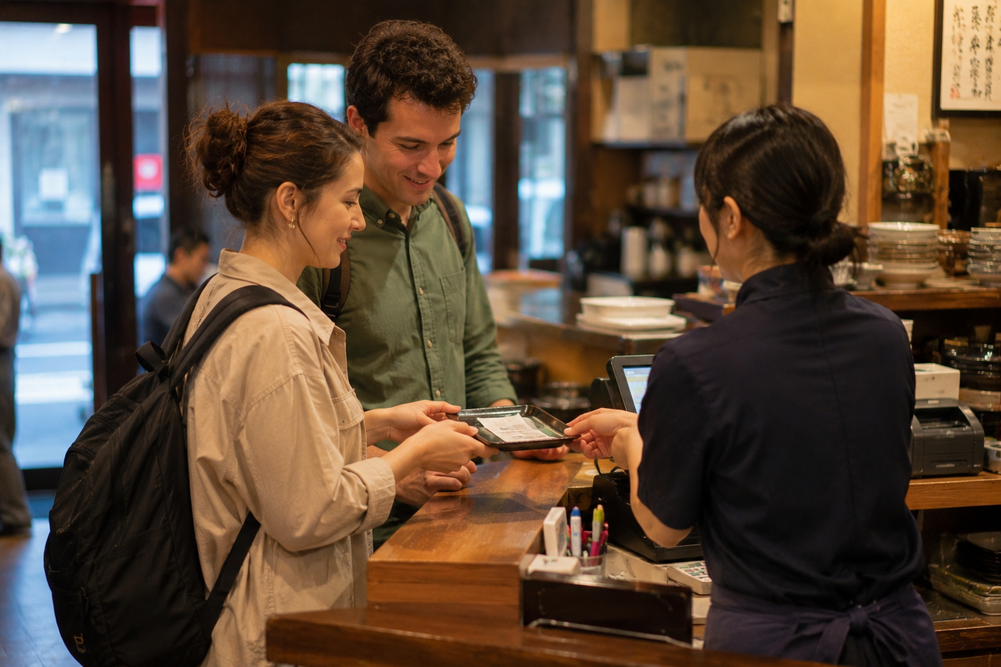
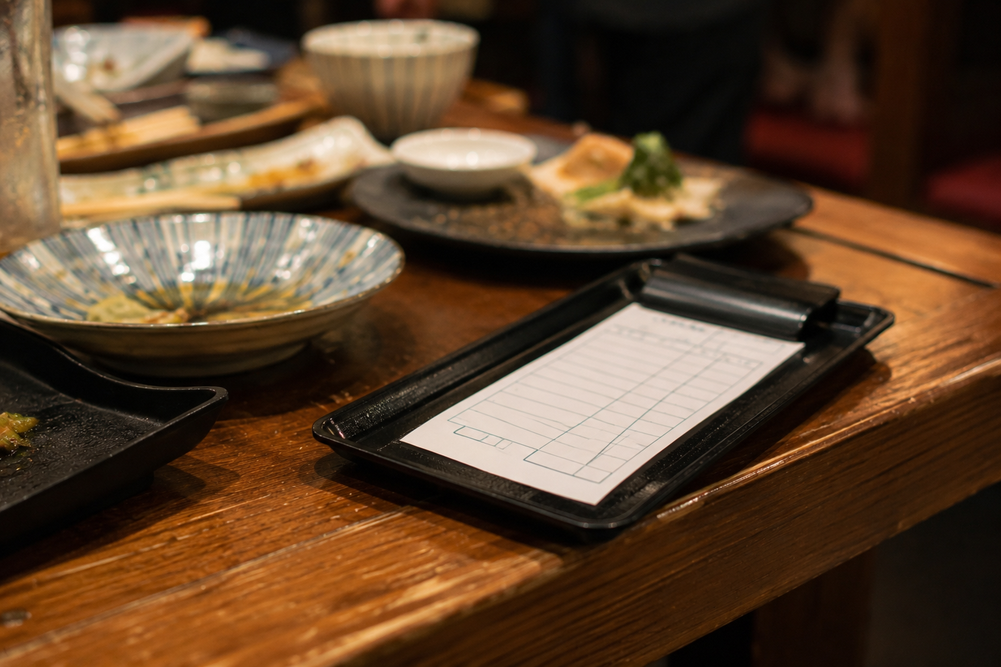
After finishing your meal, the staff will usually leave a small bill slip at your table. Instead of paying there, you normally take the bill to the register near the entrance when leaving.
Typical flow:
1. Finish the meal
2. Receive or pick up the bill slip
3. Bring the slip to the register
4. Pay at the register
5. Leave the restaurant
This system is extremely common across casual restaurants, izakaya, family restaurants, ramen shops, and many mid-range establishments.
For first-time visitors, this often feels unfamiliar at first, but it becomes intuitive very quickly once you experience it once or twice.
Another thing tourists sometimes notice is that one person often pays the entire bill first, even when dining in a group. This does not necessarily mean that person is treating everyone. In many cases, the group settles the balance afterward.
Because of this, you do not need to panic if one person immediately takes the bill and walks to the register. That is very normal in Japan.
Some restaurants also place the bill in a small tray or clip at the edge of the table throughout the meal. In these cases, you simply bring that tray to the register when you leave.
In smaller restaurants, especially traditional or locally run places, the system may feel slightly less formal, but the overall process is usually similar.
4. Is Splitting the Bill Normal in Japan?
Yes — splitting the bill is completely normal in Japan, especially in casual dining situations.
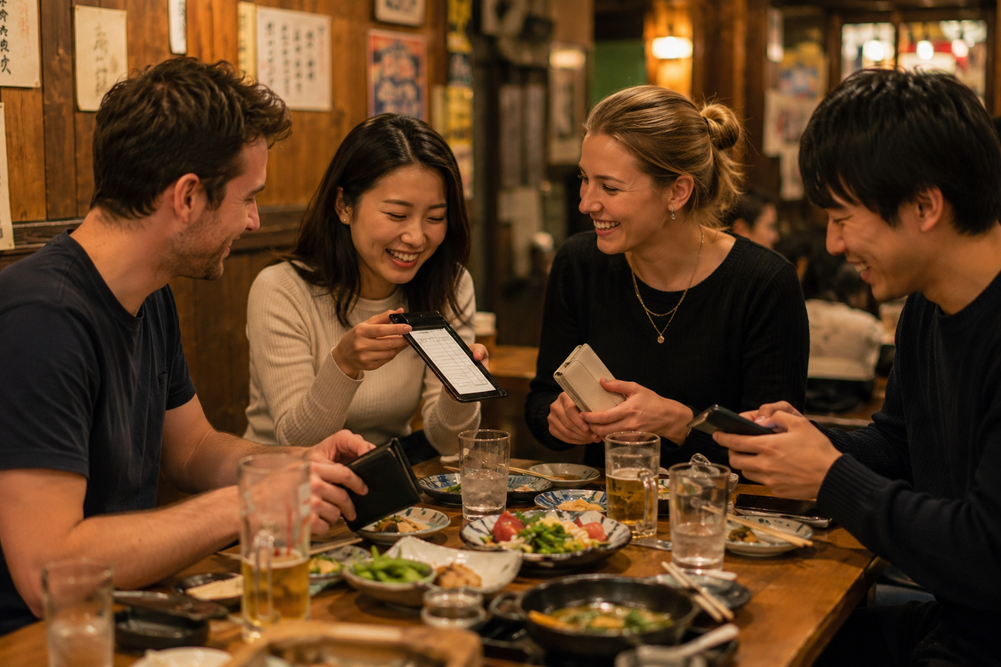
Friends traveling together, coworkers eating lunch, and groups visiting izakaya often divide the cost between multiple people. Tourists do not need to worry that asking to split the bill will automatically seem rude or strange.
However, there are a few practical things to understand.
Some restaurants allow separate payment directly at the register, while others prefer one combined payment. This often depends more on the restaurant’s operational style than on etiquette.
For example, smaller restaurants or busy izakaya may ask one person to pay the entire amount because separate transactions take more time.
In those situations, many travelers simply settle the balance among themselves afterward using cash.
The important thing to understand is that “one person pays at the register” does not automatically mean “that person pays for everyone.”
In reality, the system is often more flexible than tourists expect.
At more formal restaurants, especially high-end places, separate payments may be less common. In those cases, it is usually easier if one person handles the payment process.
But even then, tourists are not expected to understand every unwritten rule perfectly. Staff members who regularly serve foreign visitors are generally very understanding.
5. Who Usually Pays?
There is no single universal rule for who pays in Japan.
The answer usually depends on the situation, the relationship between the people dining together, and the atmosphere of the meal.
For friends traveling together, splitting the bill is very common.
For couples, the situation varies. Sometimes one person pays, sometimes the cost is shared, and sometimes people alternate between meals. There is no strict rule that tourists are expected to follow.
For families, payment arrangements are also flexible. Parents may pay, adult children may contribute, or one person may simply handle the bill for convenience.
In more formal situations, such as business dinners or meals hosted by someone older, one person may offer to pay for the group. In these cases, politely offering to contribute is usually enough.
For tourists, the most important thing is not trying to calculate the “correct” cultural behavior in every situation. Instead, simply pay attention to the atmosphere and respond politely.
In practice, Japanese dining culture is often less rigid than travelers imagine before arriving.
6. What Tourists Often Worry About
Many tourists are not worried about the money itself. They are worried about creating an awkward moment.
Some of the most common concerns include:
- “Should I offer to pay?”
- “Is it rude to split the bill?”
- “Do I hand cash directly to the server?”
- “What if I do something wrong at the register?”
- “What if I don’t understand the system?”
The reality is that most restaurants are used to serving people who are unfamiliar with Japanese dining customs.
You are not expected to behave perfectly.
If you are unsure what to do, the easiest approach is simply to watch the flow around you. In most situations, the payment process becomes obvious once other customers begin leaving.
It is also completely acceptable to ask politely if you are confused.
In Japan, calm and polite behavior matters much more than perfectly following every small custom.
This is especially true in tourist-friendly destinations, where restaurant staff regularly interact with international visitors.
For a broader restaurant guide, see: How to Order and Pay at Japanese Restaurants →
7. Can You Pay by Card?
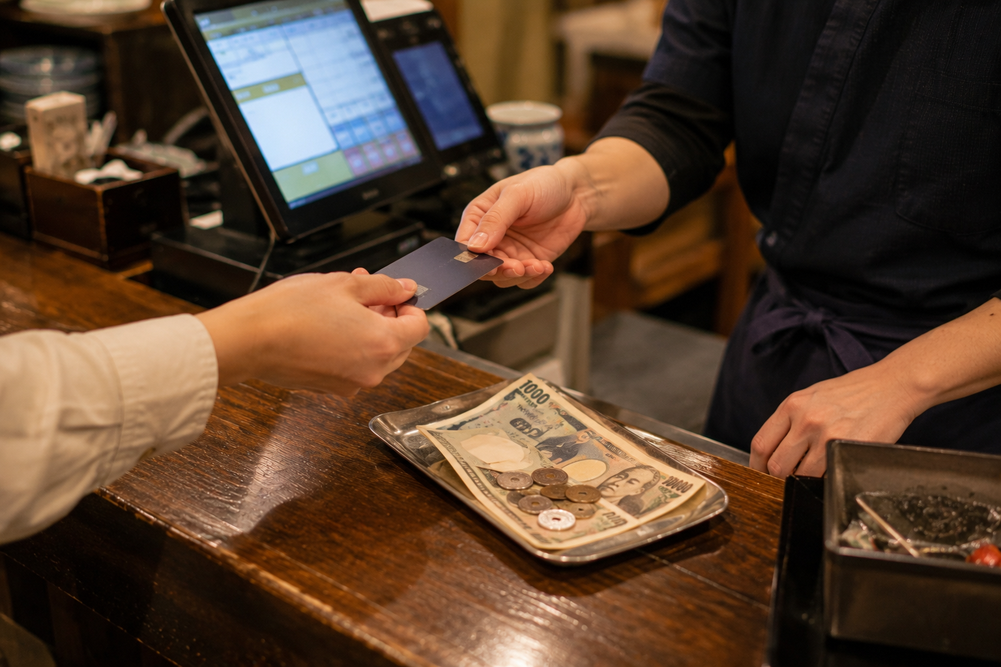
Credit card acceptance in Japan has improved significantly in recent years, especially in major cities and tourist areas.
However, cash is still important in some situations.
Large restaurants, chain establishments, department stores, and many modern cafes usually accept cards without problems. Mobile payment systems are also increasingly common.
At the same time, some smaller restaurants, independent shops, ramen stores, and older establishments may still operate on a cash-only basis.
This is particularly important in regional destinations and smaller cities.
For example, in places like Takayama, small local restaurants sometimes prefer cash even when larger tourist-oriented businesses accept cards.
Because of this, carrying at least some cash is still a good idea when traveling in Japan.
You do not need huge amounts, but relying entirely on card payment can occasionally create inconvenience.
8. Practical Tips for Tourists
Here are a few simple ways to make restaurant payment in Japan easier and less stressful:
- Carry some cash, especially outside major cities
- Watch how other customers handle payment
- Do not panic if the system feels unfamiliar at first
- One person paying first is normal
- Splitting the bill is usually acceptable in casual situations
- If unsure, ask politely
- Most staff are used to helping tourists
Simple rule: Japanese restaurant etiquette is usually more flexible than travelers imagine. Polite behavior matters more than perfect cultural knowledge.
If you want a broader overview of Japanese restaurant culture, including ordering, seating, and payment flow, see: How to Order and Pay at Japanese Restaurants →
9. Common Misconceptions
There are several common misunderstandings about paying at restaurants in Japan.
- “Splitting the bill is rude”: Usually false in casual situations.
- “Japan has extremely strict payment etiquette”: Most situations are quite flexible.
- “You must fully understand the system before dining out”: Most restaurants are easy to navigate once you experience them.
- “One person paying means they are treating everyone”: Often not true.
10. Final Thoughts
For most travelers, paying at restaurants in Japan becomes comfortable very quickly after the first few meals.
The systems may look different at first, but they are usually simple once you understand the general flow. Register payment, flexible bill splitting, and casual group arrangements are all normal parts of everyday dining in Japan.
Most importantly, tourists are not expected to understand every small cultural nuance perfectly.
Being polite, relaxed, and willing to follow the atmosphere is usually more than enough.
In practice, Japanese restaurant payment etiquette is far less intimidating than many travelers expect before visiting.