Seasonal Foods in Japan: A Complete Year-Round Guide
Introduction – Why Seasonal Food Is Essential to Japanese Culture
Japan is a country where food and nature are inseparable. Each season brings unique ingredients, dishes, and traditions. For travelers, experiencing seasonal food is one of the best ways to connect with Japanese culture.
This guide introduces the highlights of Japanese seasonal cuisine across spring, summer, autumn, and winter, with links to detailed guides for each season.
Spring (March–May) 🌸
Spring is the season of renewal, marked by cherry blossoms and fresh ingredients.
-
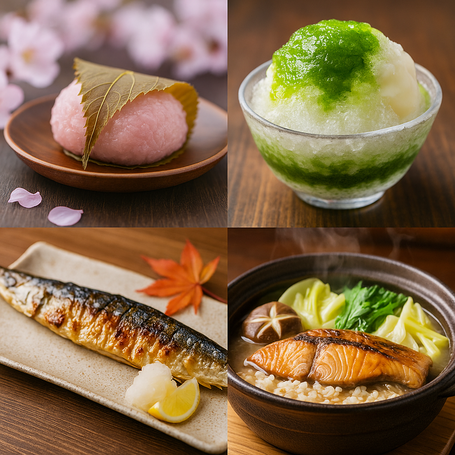
Sakura mochi (桜餅) – Pink rice cake wrapped in cherry leaf.
-
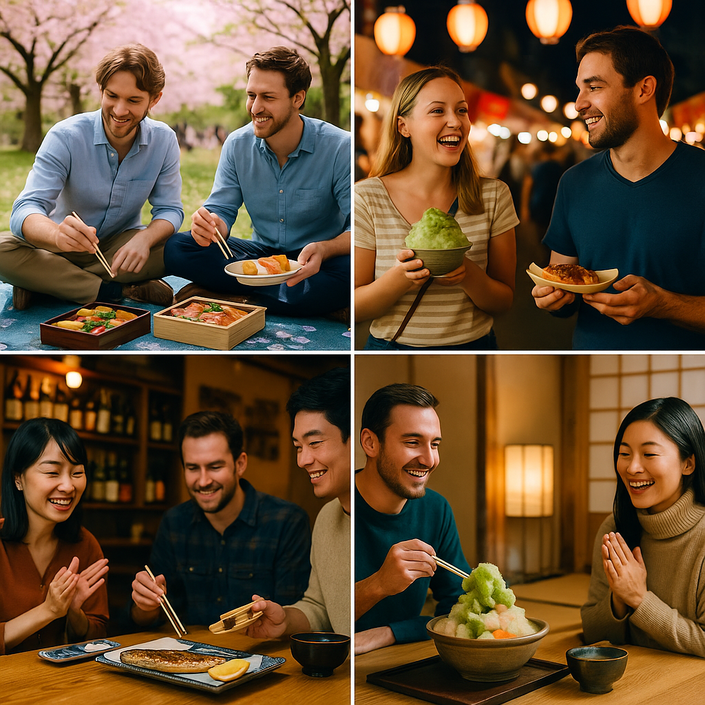
Hanami bento (花見弁当) – Picnic lunch boxes for cherry blossom viewing.
-
Takenoko (竹の子, bamboo shoots) – A classic spring vegetable.
-
Strawberries (いちご) – Widely used in cakes and parfaits.
👉 For details, see our full guide: [Seasonal Foods in Japan: What to Try in Spring]
Summer (June–August) ☀️
Japanese summers are hot and humid, so refreshing and energizing foods take center stage.
-
Hiyashi Chūka (冷やし中華) – Cold ramen with colorful toppings.
-
Kakigōri (かき氷) – Shaved ice with syrups like matcha and strawberry.
-
Unagi (うなぎ, grilled eel) – Eaten for stamina on the Day of the Ox.
-
Festival snacks – Takoyaki, okonomiyaki, yakitori.
👉 For details, see our full guide: [Seasonal Foods in Japan: What to Try in Summer]
Autumn (September–November) 🍂
Autumn is known as shokuyoku no aki (食欲の秋, “the season of appetite”), filled with harvest flavors.
-
Sanma (秋刀魚, Pacific saury) – Salt-grilled, symbolic of autumn.
-
Matsutake (松茸) – Aromatic mushrooms, prized in soups and rice.
-
Kuri gohan (栗ご飯) – Rice with chestnuts.
-
Persimmons (柿) – A beloved seasonal fruit.
👉 For details, see our full guide: [Seasonal Foods in Japan: What to Try in Autumn]
Winter (December–February) ❄️
Winter food is hearty, warm, and deeply tied to New Year traditions.
-
Oden (おでん) – Hotpot with daikon, eggs, and tofu.
-
Nabe (鍋料理) – Shabu-shabu and sukiyaki hotpots.
-
Fugu (ふぐ, pufferfish) – A winter delicacy.
-
Osechi ryori (お節料理) – Traditional New Year’s feast.
-
Mikan (みかん) – Sweet citrus fruit, eaten under the kotatsu.
👉 For details, see our full guide: [Seasonal Foods in Japan: What to Try in Winter]
Traveler Tips
-
Seasonal menus often appear only for a short period—look for “季節限定 (kisetsu gentei, seasonal special)” on menus.
-
Department stores (depachika) and konbini release seasonal sweets and drinks every few weeks.
-
Some seasonal restaurants and popular dishes (like unagi in summer or fugu in winter) require reservations—plan ahead.
How Our Service Helps
Enjoying seasonal food is one of the highlights of visiting Japan, but reservations can be difficult without Japanese. Our service helps secure bookings at restaurants offering seasonal menus, ensuring you don’t miss out.
Conclusion
Japan’s seasonal foods are more than just meals—they are cultural experiences tied to nature, festivals, and tradition. Whether it’s sakura mochi in spring, kakigōri in summer, matsutake in autumn, or hotpot in winter, each season tells a story through food.
👉 Contact us if you’d like support booking seasonal dining experiences in Japan with English-friendly communication.