Takayama Walking Route Guide: Best Self-Guided Route for First-Time Visitors
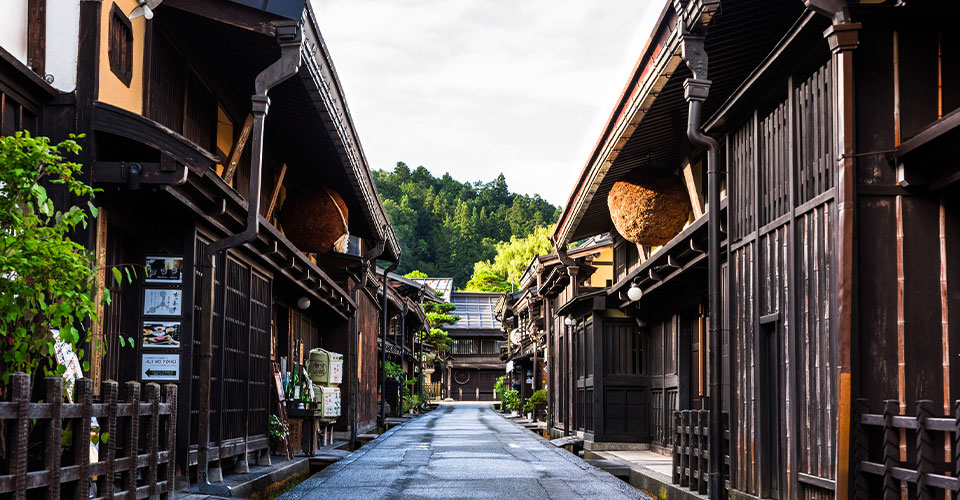
Takayama is one of the easiest small cities in Japan to explore on foot, but first-time visitors often make the same mistake: they assume that “walkable” means “no planning needed.” In reality, Takayama rewards travelers who understand the city’s rhythm. The morning market works best early, the old town feels different before and after midday, and some places that look close on a map are not worth forcing into the same walking loop.
This guide is designed for travelers who want more than a simple list of attractions. Instead of just saying “go here, then go there,” it explains the best self-guided walking route in Takayama, why that sequence works, how long each part usually takes, and when to use a shorter or longer variation. It is especially useful if you want to avoid wasted steps, unnecessary backtracking, and the common problem of reaching key areas at the wrong time.
The core route in this guide connects Takayama’s most practical central highlights: Miyagawa Morning Market, Takayama Jinya, the old town area around Sanmachi Suji, and nearby food and shopping streets. It also explains when to add Hida Folk Village (Hida no Sato), when not to add it, and how to choose between a half-day route, a full-day route, and seasonal variations.
For most first-time visitors, the best Takayama walk is not the longest one. It is the one that matches your time, energy, and travel priorities. That is exactly what this guide is built to help you do.
Quick Walking Route Summary (For Busy Travelers)
Main central route: Miyagawa Morning Market → Takayama Jinya → Old Town / Sanmachi Suji
Best start time: around 8:00–9:00 AM
Best for: first-time visitors, self-guided walking, photography, local snacks, historic atmosphere
Ideal duration: 3 to 5 hours for the central route; 5 to 7 hours if you add museums, lunch stops, and a folk village extension
Best strategy: start early, walk the market first, then move south and west toward Jinya and the old town
Common mistake: starting too late and reaching the morning market after the best atmosphere has already passed
If you want the broader trip structure first, start here: 2-Day Takayama Itinerary →
1) Why a Walking Route Matters in Takayama
Takayama is compact, but it is not “tiny” in the way some travelers imagine. The central sightseeing areas are close enough that you do not need complicated transport for the main route, yet they are spread out enough that route order matters. That is especially true if you are trying to combine sightseeing with food stops, shopping, photography, or seasonal timing.
A good walking route in Takayama does three things well. First, it places each area at the right time of day. Second, it reduces backtracking between attractions that are technically close but not naturally connected if visited in the wrong order. Third, it helps you preserve energy for the part of Takayama where most people actually spend the longest time: the old town.
Many visitors arrive at Takayama Station, wander toward one area without a plan, notice another place on the map, turn back, and end up repeating streets. That is not a disaster, but it weakens the experience. Takayama is a place where rhythm matters. If you hit the market too late, it feels flatter. If you do the old town before everything else, you may get the busiest version of it and run low on time later. If you try to force Hida Folk Village (Hida no Sato) into a fully walkable city-center loop, the day starts to feel inefficient.
This is why a route guide is more useful than a simple “things to do” list. A list tells you what exists. A route tells you how to use the city well.
2) The Best Core Walking Route for First-Time Visitors
For most travelers, the best self-guided walking route in Takayama is:
Takayama Station area → Miyagawa Morning Market → Takayama Jinya area → Sanmachi Suji / Old Town → nearby food and shopping streets → optional café, museum, or sake stop
This route works because it follows the city’s sightseeing rhythm rather than just geographic distance. The market is a morning place. Jinya fits naturally after that because it sits between the market zone and the old town flow. Sanmachi Suji and the surrounding historic streets are better when you can slow down and browse without worrying about reaching the market in time. Lunch and snack stops also make more sense after you have already seen the morning market and historic core.
If you start from Takayama Station, the walk to the market area is straightforward and manageable. Once you are inside the central sightseeing zone, the route becomes even easier. The terrain is generally flat, navigation is simple, and the city is much less stressful to walk than larger tourist destinations.
This core route is best for travelers who:
- want a practical first-day orientation to Takayama
- prefer exploring independently instead of joining a guided tour
- care about atmosphere as much as checklist sightseeing
- want to combine food, history, and traditional streets in one smooth walk
It is not the best route for travelers who are only in the city for one rushed hour, or for those whose main priority is a bus-based day trip outside the center. In those cases, a shorter or more specialized route works better.
3) Step 1: Start at Miyagawa Morning Market
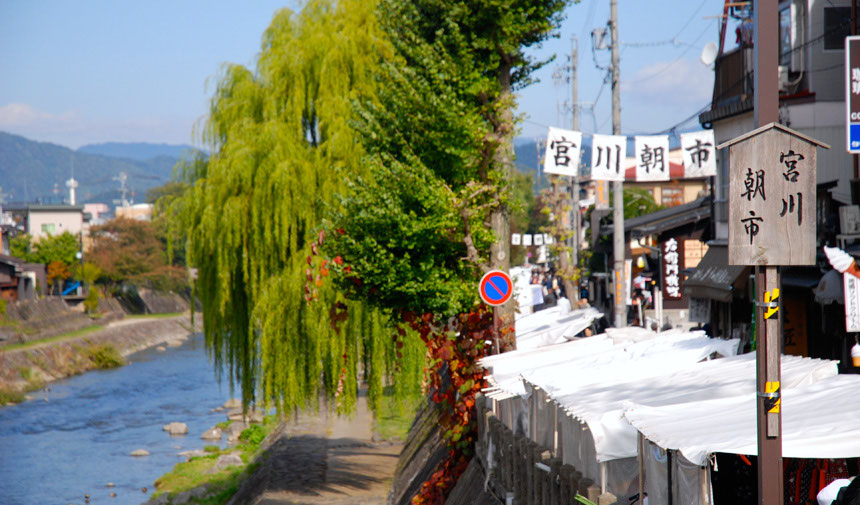
The best place to begin most Takayama walking days is Miyagawa Morning Market. Starting here gives your day a strong foundation because the market is one of the few attractions in central Takayama that clearly benefits from an early visit. The air feels calmer, the riverside setting is more pleasant, and the overall atmosphere is closer to local daily rhythm than to peak sightseeing traffic.
If you arrive too late, the market is still worth seeing, but the experience is weaker. That matters because the market is not just a shopping stop. It is part of how Takayama feels in the morning. The slower pace, the riverside walk, the light snack culture, and the mix of produce, small souvenirs, and local items all work best early in the day.
A good working plan is to arrive in the area between about 8:00 and 9:00 AM. You do not need to be obsessively early, but you do want to avoid treating it like a late-morning attraction. Most travelers need around 30 to 45 minutes here, though food-focused visitors can spend longer if they like browsing slowly and making small snack stops.
The market also works well as an orientation point. Once you begin here, it becomes much easier to understand how the rest of central Takayama connects. The river, bridges, nearby streets, and flow toward the old town all begin to make sense on foot.
If you want the detailed breakdown of what to expect there, use: Takayama Morning Market Guide →
Why this stop works best first
From an itinerary design perspective, the morning market is a time-sensitive stop. The old town can still be enjoyable later in the morning or around lunchtime. The market is less forgiving. That is why a market-first route is usually stronger than an old-town-first route, especially for travelers visiting Takayama only once.
Starting here also helps mentally. The market is relaxed and easy. It lets you settle into Takayama before making decisions about where to linger longer. In a city that is best appreciated slowly, that matters.
Best for at this stage
- light snacking rather than a full meal
- gentle morning photography
- getting into the city’s pace before the busier old town section
- buying small, easy-to-carry souvenirs rather than heavy shopping
Potential downside: if the weather is poor or you start late, the value of opening the day here drops. In that case, a Jinya-first or old-town-first variation may be more practical.
4) Step 2: Move Toward Takayama Jinya
After the market, the next natural step is the Takayama Jinya area. This transition works well because it keeps your walk efficient while shifting the tone of the day from local market atmosphere to historical and administrative history. In other words, it deepens the experience without breaking the flow.
Takayama Jinya is important in route logic even for travelers who do not plan to spend a long time inside. It acts as a connective point between the market side of the city and the old town side. If you skip it completely, that is fine, but the surrounding area still works as a useful part of your walking line.
For visitors who like historical context, this is often where the day starts to feel more substantial. The market is enjoyable, but Jinya gives you a stronger sense of how Takayama functioned historically. That makes the old town section that follows feel richer rather than just photogenic.
If you enter and explore properly, allow roughly 30 to 45 minutes. If you only want an exterior look and a short surrounding walk, 10 to 20 minutes can be enough. The key point is not the exact duration. The key point is that Jinya fits the route naturally at this stage, before you commit the rest of your energy to the old town.

This part of the walk is especially useful for travelers who:
- want variety rather than only shops and snacks
- prefer balancing cultural content with atmosphere
- are building a half-day route and want a clear midpoint before the old town
One more practical reason to place Jinya here: if you do it later, after a long old-town browse and lunch, you may find your motivation has dropped. The route works better when more structured sightseeing comes before the most open-ended browsing zone.
5) Step 3: Spend the Longest Time in the Old Town / Sanmachi Suji
This is the heart of the walking route. For most first-time visitors, the old town area around Sanmachi Suji is the part of Takayama that feels most iconic. Traditional wooden merchant buildings, sake breweries, small food stops, and a strong “historic Japan” atmosphere make it the city’s most naturally browsable zone.
Because this is the most open-ended part of the day, it makes sense to arrive here after completing your more time-sensitive morning stop and your structured historical stop. Now you can slow down.
This is where many route guides are too vague, so it helps to be specific. You should think of the old town not as one quick street, but as an area where you will likely spend between 90 minutes and 3 hours depending on your travel style. Fast walkers who only want photos can move through much more quickly, but most visitors naturally stay longer because this zone encourages drifting, browsing, snacking, and re-checking side streets.
If you want the detailed area guide, use: Takayama Old Town Guide →
Why this section works better later in the route
What makes this section stronger in the late morning rather than first thing in the morning? Three things. First, you do not have to worry about missing the market atmosphere. Second, your route becomes more linear. Third, this is the easiest place to absorb flexible time. If you are moving quickly, you can pass through. If you are enjoying it more than expected, you can stretch the visit naturally.
What this zone is best for
- local snacks and casual lunch
- short shopping breaks
- photography focused on traditional streets
- browsing sake-related shops and regional souvenirs
- taking a slower pace without feeling like you are “wasting” sightseeing time
A common mistake is assuming the old town should always come first because it is the most famous area. In practice, that often weakens the full-day experience. Doing it first can mean reaching the morning market later than ideal, and it can also fragment the rest of the route because you end up bouncing between high-interest zones instead of progressing through them.
Another common mistake is treating Sanmachi Suji as the whole old-town experience. In reality, part of the value comes from the surrounding streets, transitions, and smaller side sections. A strong self-guided walk leaves room for curiosity here.
For food-focused travelers, this is where the route often expands. People who only expected a quick browse may end up stopping for Hida beef items, sweets, coffee, sake tasting, or a more formal lunch. That is normal and should be built into the route. The old town is not just a corridor between landmarks; it is a destination zone in its own right.
If you want the broader food context before you walk, use: What to Eat in Takayama →
And if ramen is part of your plan after the central walk, use: Best Takayama Ramen Shops →
6) How Long the Core Route Really Takes
One reason travelers misjudge Takayama is that the city looks small on the map. The physical walking distances in the center are not difficult, but the actual sightseeing time is longer than people expect because the route includes places that invite slowing down.
As a practical guide:
- A fast “see the essentials” version takes around 2.5 to 3.5 hours.
- A comfortable first-time version takes around 4 to 5 hours.
- A food-heavy, browse-heavy version can easily take 5 to 6 hours.
This difference matters because route planning is not only about walking time. It is about absorption time. Markets, historic streets, snack stops, browsing, and photography all extend the day. That is why this guide recommends thinking in blocks rather than exact stopwatch timing.
A strong first-time schedule often looks like this:
8:15–9:00 market area
9:15–9:45 Jinya or surrounding historical area
10:00–12:30 old town and side streets
12:30 onward lunch, shopping, rest, or optional extension
That is not the only valid version, but it shows why “Takayama is walkable” should not be interpreted as “Takayama is quick.”
7) Optional Extension: Should You Add Hida Folk Village?
This is one of the most important route decisions, because many travelers try to force Hida Folk Village (Hida no Sato) into the main city-center walk without thinking carefully about what kind of day they actually want.
The first thing to understand is that Hida Folk Village (Hida no Sato) is not a natural continuation of the central walk in the same way that the market, Jinya, and old town connect. It is a separate extension. That does not mean it is a bad addition. It means you should treat it as a deliberate add-on, not as something to casually squeeze in on foot after everything else.
If you want the full attraction guide, use: Hida Folk Village (Hida no Sato) →

The best reasons to add it are:
- you want deeper architectural and rural-history context
- you have most of a day available
- you are particularly interested in traditional houses
- you are visiting in winter or another strong scenic season
- you have already accepted that this is no longer a “simple central walking loop”
The best reasons not to add it are:
- you only have half a day
- you mainly care about the central atmosphere of Takayama
- you prefer a relaxed lunch and café pace after the old town
- you are already doing another out-of-center destination that day
This is exactly where many visitors make the wrong call. They hear that Takayama is compact, then assume everything important should be combined into one walking day. But efficient travel is not about maximizing the number of named spots. It is about maintaining the right energy and route logic.
For many first-time visitors, the smartest approach is:
Day 1 or main central walk: market + Jinya + old town
Separate extension block: Hida Folk Village (Hida no Sato) or another non-central attraction
In winter, however, the argument for adding Hida Folk Village (Hida no Sato) becomes stronger because seasonal atmosphere increases its value significantly.
8) Route Variation 1: Best Half-Day Walking Route
If you only have half a day in Takayama, the best route is usually:
Miyagawa Morning Market → Old Town / Sanmachi Suji → one focused food stop
This version is better than trying to cram in too many named spots. In a short visit, the goal should be to preserve Takayama’s character rather than race through every possible attraction.
If you start early, you can still have a satisfying experience. The market gives you local rhythm, and the old town gives you the strongest visual and cultural identity. You may add a quick Jinya exterior or nearby pass-through if convenient, but in a true half-day schedule, the old town deserves priority over over-structuring.
This variation is best for:
- day trippers
- travelers arriving late morning but still wanting a coherent route
- people who care more about atmosphere and food than formal historical interiors
The main risk here is overloading the half-day route with too many expectations. Once you accept that half-day Takayama is about quality rather than total coverage, the route becomes much stronger.
9) Route Variation 2: Best Full-Day Central Route
If you have a full day and want a richer city experience without making it feel rushed, use this structure:
Morning market → Jinya → old town browsing → lunch → museum, café, sake stop, or second pass through quieter streets
This version works because it respects both timing and energy. Your first half of the day handles the more “structured” sightseeing rhythm. Your second half becomes more flexible and interest-driven.
This is the best choice for travelers who want:
- a meaningful first experience of Takayama
- a balance of food, streets, local culture, and history
- enough unstructured time to notice small things rather than just major names
A full-day route is also ideal if you want Takayama to feel more than “picturesque.” The city’s value increases when you allow time for transitions, pauses, and atmosphere rather than treating the route like a speed checklist.
10) Route Variation 3: Rainy Day Walking Route
Rain changes Takayama less dramatically than some destinations, but it does affect what kind of route feels satisfying. On a rainy day, the smartest strategy is to shorten the open-air wandering sections and increase the value of places where weather matters less.
A practical rainy day route looks like:
Jinya area → shorter market pass if conditions allow → old town with focused indoor stops → café or lunch break
The reason this works is simple. The market is less atmosphere-rich in rain unless you personally enjoy that mood. The old town is still worth seeing, but long, aimless wandering becomes less attractive. So the route should shift from “slow scenic flow” to “purposeful compact browsing.”
Rainy-day priorities:
- reduce unnecessary detours
- identify 2 to 3 meaningful indoor or semi-indoor stops
- avoid forcing a long photography-focused route
- give yourself more time for food and rest breaks
This is one area where travelers often improve their trip simply by lowering route ambition. Takayama does not need to be conquered. It needs to be used well.
11) Route Variation 4: Winter Walking Route
Winter changes Takayama’s mood more than any other season. The city becomes quieter, more atmospheric, and more dependent on practical pacing. Snow and cold do not make the central walking route impossible, but they do change how it should be managed.
If you are walking Takayama in winter, the biggest adjustment is not necessarily distance. It is tempo. You may walk more slowly, stop more often, and care more about warm food, indoor breaks, and surface conditions.
A good winter route often looks like:
slightly later start → compact market visit → old town focus → warm lunch → optional snowy scenic extension if conditions are comfortable
If you are planning your visit around winter specifically, also use: Best Time to Visit Takayama →
For the full cold-season version of the city, use: Takayama in Winter →
Winter is also the season when Hida Folk Village (Hida no Sato) becomes especially attractive. Snow-covered traditional houses add a strong visual contrast to the central merchant-street atmosphere of the old town. But again, it should be treated as an intentional extension, not a casual afterthought.
12) Common Walking Mistakes to Avoid
Mistake 1: Starting too late
This is probably the most common problem. The market loses much of its strength if treated like a midday attraction. A late start also compresses the rest of your day and reduces flexibility.
Mistake 2: Doing the old town first without a reason
This is not always wrong, but for most first-time visitors it weakens route flow. The old town is better as the “long middle” of the day, after the market and before flexible food and shopping time.
Mistake 3: Underestimating food and browsing time
Takayama looks simple on paper, but food stops, small purchases, and curiosity slow the route naturally. That is part of the appeal, not a problem to eliminate.
Mistake 4: Forcing Hida Folk Village into a purely walkable central loop
This creates a day that feels more fragmented than it needs to be. Treat Hida Folk Village (Hida no Sato) as a proper extension.
Mistake 5: Thinking the goal is to cover everything
The best Takayama walk is not the route with the highest number of named attractions. It is the one that gives you the strongest sense of place.
13) Practical Tips for a Better Self-Guided Walk
Wear comfortable shoes, but do not overthink difficulty. The central walking route is easy for most visitors, and the real issue is duration rather than terrain.
Start with a clear priority. Ask yourself whether your day is mainly about atmosphere, food, photography, or efficient coverage. That one decision improves route choices more than any map.
Protect the old town portion of the day. Do not arrive there already tired, rushed, or worried about another time-sensitive stop.
Use natural pauses. Takayama works best when you allow short rest moments rather than treating the walk like a performance of endurance.
Do not confuse “compact city” with “instant city.” Takayama is best enjoyed at a slightly slower tempo than large Japanese urban destinations.
14) My Practical Recommendation for First-Time Visitors
If this is your first time in Takayama and you want one route that is reliable, efficient, and satisfying, use this:
Start early at Miyagawa Morning Market.
Move toward Takayama Jinya.
Spend the largest block of time in the old town and surrounding historic streets.
Pause for food naturally rather than scheduling it too rigidly.
Only add Hida Folk Village (Hida no Sato) if you truly have the time and energy for an extension.
This route works because it respects both the geography and the daily rhythm of the city. It also leaves room for the thing Takayama does especially well: rewarding slow curiosity.
Summary
The best Takayama walking route is not complicated, but it does benefit from structure. For most first-time visitors, the strongest self-guided route is Miyagawa Morning Market → Takayama Jinya → Old Town / Sanmachi Suji, with food, shopping, and optional extensions added afterward according to time and interest.
What makes this route work is not only efficiency. It is the way it matches Takayama’s character. You begin with local morning rhythm, move into historical context, and end in the city’s most atmospheric browsing zone.
If you want Takayama to feel smooth rather than fragmented, this is the route to follow.