Is Takayama Too Far from Tokyo? A Practical Travel Reality Check
When travelers first discover Takayama while planning a trip to Japan, one question almost always comes up immediately: is Takayama too far from Tokyo? On a map, Takayama sits deep in the mountains of central Japan, away from the main travel route that connects Tokyo, Kyoto, and Osaka. For many first-time visitors, that visual impression creates hesitation before they even look at the actual transportation options.
However, what looks far on a map does not always translate into difficulty in real travel. Japan’s transportation system is designed to make long-distance travel smooth, reliable, and surprisingly simple, even for first-time visitors. In many cases, journeys that appear complicated at first glance become straightforward once you understand how they are structured. Takayama is a perfect example of this.
This guide breaks down the reality behind the question. Instead of giving a vague answer, it shows exactly how long the journey takes, what the route looks like step by step, and why the trip is much easier than many travelers expect. More importantly, it explains whether Takayama is worth the travel time at all, which is the real decision behind the question.
Quick Answer
No — Takayama is not too far from Tokyo.
Travel time is typically around four to four and a half hours with just one transfer.
For most international travelers, this is a completely normal and manageable travel day.
If you're comparing destinations, read: Takayama vs Kyoto →
How Far Is Takayama from Tokyo?
The most common route from Tokyo to Takayama takes approximately four to four and a half hours by train. While this may initially sound long, it is important to interpret that time correctly. In many countries, a journey of this length would involve airport transfers, waiting time, and multiple layers of logistics. In Japan, the entire journey is completed by train with high punctuality and minimal friction.
The distance itself is not extreme in the context of international travel. Many travelers coming from Europe, North America, or Australia are used to traveling several hours between cities. The difference in Japan is that the experience is structured, predictable, and easy to follow even for first-time visitors.
More importantly, the journey requires only one transfer. This is a critical point because the perceived difficulty of travel often depends more on complexity than on time. A four-hour journey with multiple uncertain transfers can feel stressful. A four-hour journey with one clear transfer often feels simple.
Real Travel Route Example
To make this more concrete, here is a real and commonly used route:
- Tokyo Station → Nagoya Station (Shinkansen)
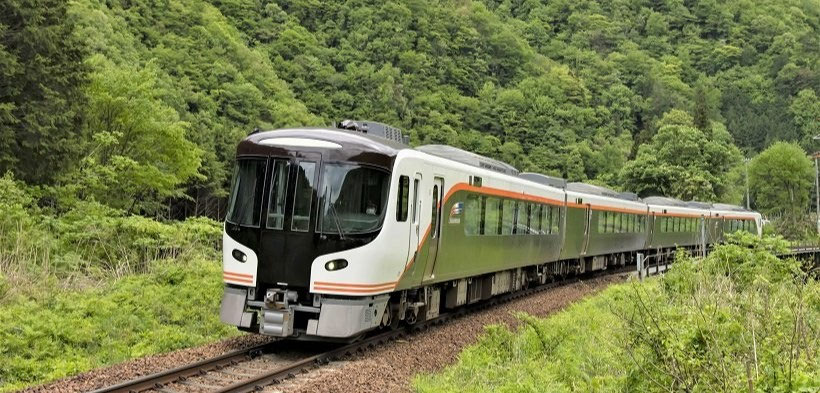
- Nagoya Station → Takayama Station (Limited Express Hida)
A realistic example schedule looks like this:
- 09:00 – Depart Tokyo Station (Shinkansen)
- 10:40 – Arrive Nagoya Station
- 10:48 – Depart Nagoya Station (Limited Express Hida)
- 13:17 – Arrive Takayama Station
This schedule shows how smooth the connection is. You arrive in Nagoya, transfer once, and continue directly to Takayama. The transfer time is short but comfortable, and stations are clearly organized for navigation.
One of the most notable parts of the journey is the second train. After leaving Nagoya, the scenery gradually shifts from urban landscapes to rural valleys and mountains. This change in environment helps the journey feel less like a long commute and more like part of the travel experience itself.

Why It Feels Far, But Isn’t
Despite the straightforward route, many travelers still feel that Takayama is far. This perception is usually driven by three factors. First, it is not located on the main Tokyo to Kyoto route. Second, it requires one transfer. Third, it appears remote on maps.
These factors create a psychological barrier rather than a practical one. Travelers often equate not being on the main route with difficulty, even when the actual travel time is reasonable. Similarly, the idea of transferring trains can feel intimidating before experiencing it firsthand.
In reality, Japan’s train system is designed to minimize confusion. Signs are clear, announcements are frequent, and staff are generally helpful when needed. Once travelers complete their first transfer, the process often feels much easier than expected.
At this point, the more important question is not whether Takayama is too far, but whether it is worth the journey. Distance only matters in relation to value. If a destination offers something unique and meaningful, a four-hour journey can be easily justified. If it does not, even a shorter trip can feel like a waste of time.
Is It Worth Going That Far?
Takayama stands out because it offers a very different experience from both Tokyo and Kyoto. Tokyo is a large, modern metropolis with endless energy and variety. Kyoto is a historic city with major temples, shrines, and a wide range of cultural attractions. Takayama, by contrast, is a smaller town with a more concentrated and relaxed atmosphere. It is known for its preserved old town, local markets, and regional food culture.
For many travelers, this contrast is exactly what makes Takayama worthwhile. After spending time in large cities, a smaller destination can feel refreshing. The pace is slower, distances are shorter, and the experience is often more cohesive. Instead of moving between multiple large districts, you can explore the town on foot, discover local shops, and focus more on the atmosphere.
Food is another major factor that increases Takayama’s value. The region is known for Hida beef, one of Japan’s premium wagyu varieties, as well as local ramen and traditional snacks. Unlike larger cities where food options are spread across many areas, Takayama’s food experience is compact and easy to access. This makes it possible to combine sightseeing and dining in a natural way without extensive planning.
From a trip design perspective, Takayama works particularly well as part of a multi-destination itinerary. One of the most common and effective routes is Tokyo to Takayama to Kyoto. This structure creates a clear progression: modern city, regional town, and historic cultural capital. Each destination offers a different perspective on Japan, making the overall trip more varied and memorable.
This kind of itinerary is especially realistic for international travelers who stay in Japan for a week or more. While it may seem ambitious at first, the actual travel distances and connections make it entirely manageable. The key is to view Takayama not as a side trip, but as a distinct destination that adds value to the overall experience.
Best Way to Get There
The most recommended route is the train route via Nagoya. It balances speed, comfort, and reliability.
If you are using a rail pass, the journey can be fully covered by using Hikari trains instead of Nozomi on the Shinkansen section and the Limited Express Hida for the second section. This makes it a cost-effective option if you are planning multiple long-distance trips within Japan.
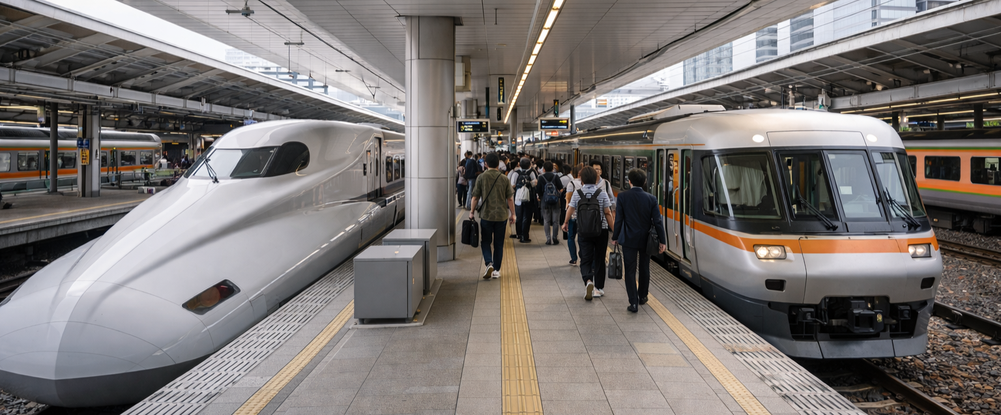
At Tokyo Station, you begin with the Tokaido Shinkansen. If you are traveling without a rail pass and want the fastest route, a Nozomi service is usually the most efficient choice. If you are traveling with the Japan Rail Pass, Hikari is usually the most practical Shinkansen option. The exact departure platform can change, so the key is to follow the Shinkansen signs and confirm the platform number on the station boards or your ticket.
At Nagoya Station, you transfer to the Limited Express Hida. This is where many first-time travelers become nervous in advance, but the actual transfer is usually much less stressful than imagined. Nagoya Station is large, but it is organized, and the Limited Express Hida is clearly identified. If you leave enough time to move at a normal pace, there is little reason to worry.
The second train is also part of what makes the journey enjoyable. Instead of feeling like a purely functional connection, it gradually transforms into a scenic regional route. As the train leaves the larger urban zone behind, the surrounding landscape becomes greener, narrower, and more mountainous. This gives the trip a built-in sense of arrival.
If you want the full breakdown of when a rail pass is useful, see: How to Use the Japan Rail Pass Effectively →
How to Fit Takayama into Your Trip
Takayama works best as part of a multi-city itinerary rather than as an isolated idea. One of the strongest route structures is Tokyo to Takayama to Kyoto.
This route works because it creates contrast. Tokyo gives you the modern, high-density urban experience. Takayama gives you a quieter, more compact regional stop with traditional atmosphere and strong food identity. Kyoto then gives you a larger historic city with broader cultural weight. Instead of repeating the same kind of destination, the route lets each place play a different role.
This is one reason Takayama fits so well into longer international trips. For many foreign travelers, Japan is not a three-day break. It is a one-week, ten-day, or two-week itinerary. In that context, a four-hour travel day between major stops is entirely normal.
Takayama can also work before Kyoto rather than after it. Some travelers prefer to experience the smaller, quieter destination first, then move into the more famous cultural city later. Others prefer Kyoto first and Takayama afterward as a calmer contrast. Either way, the point is that Takayama is not too far in itinerary terms. It simply needs to be treated as a real destination.
If you are building your overall Japan route, start with: Tokyo Itinerary →
And for your stay in Takayama, use: Takayama Itinerary →
Who Should Go, and Who Should Skip
Takayama is a strong choice if you want a destination that feels more traditional, quieter, and easier to manage than a major city. It works especially well for travelers who enjoy walking, regional food, local atmosphere, and a slower travel pace. It is also a very good option for people who want something more distinctive than the most obvious standard route.
Takayama may be less ideal if you have a very short trip and want to minimize intercity travel. It may also be less essential for travelers who strongly prefer large cities, major landmark density, and nonstop urban energy. In those cases, a more standard route may fit better.
That said, many people who are initially unsure about Takayama end up being pleasantly surprised by how rewarding it feels. Because the town is compact and the main experiences connect naturally, the destination often gives more satisfaction per hour than first-time visitors expect.
Why the Journey Often Feels Easier Than Expected
In addition to understanding the basic route and travel time, it is also helpful to think about how the journey feels from a traveler’s perspective. One of the biggest reasons people hesitate to go to Takayama is not the actual time required, but the uncertainty around the process. When a route is unfamiliar, even a simple journey can feel more complicated than it really is.
This is especially true for travelers who are visiting Japan for the first time. The idea of navigating large stations, finding the correct platform, and making a transfer can seem intimidating before experiencing it firsthand. However, in practice, Japan’s rail system is designed to minimize this kind of stress. Signs are clear, announcements are frequent, and staff are generally helpful when needed.
At Tokyo Station, the Shinkansen platforms are well marked, and tickets clearly indicate departure times and car numbers. Once on the train, the experience is comfortable and predictable. Seats are reserved, luggage space is available, and the ride is smooth. This part of the journey often becomes one of the easiest long-distance travel experiences many visitors have ever had.
When you arrive at Nagoya Station, the transfer process is usually straightforward. While Nagoya is a large station, it is less complex than Tokyo, and navigation tends to be easier. The Limited Express Hida typically departs from clearly designated platforms, and there is enough time to move between trains without rushing. Many travelers find that this transfer, which they initially worried about, turns out to be much simpler than expected.
The second half of the journey, from Nagoya to Takayama, also contributes to the overall experience in a meaningful way. Unlike the high-speed Shinkansen, the Limited Express Hida moves at a slower pace, allowing passengers to enjoy the changing scenery. The route follows rivers, passes through small towns, and gradually climbs into mountainous areas. This shift creates a sense of transition, as if you are moving not just geographically but also culturally.
Another useful way to evaluate the distance is to compare it with other travel scenarios that international visitors may already be familiar with. In many countries, traveling between major cities can easily take four to six hours, often involving airports, security checks, and waiting time. In Japan, a similar travel time is spent entirely on trains, without the need for early check-in or extensive waiting.
This difference makes the journey to Takayama feel more efficient than it might appear on paper. Even though the total travel time is similar to a short flight in other countries, the overall experience is often smoother and less stressful. For many travelers, this changes their perception of distance completely.
Sample Itinerary Patterns That Make Sense
Sometimes the easiest way to judge a destination is to imagine how it would fit into an actual route. For example, if you are spending four nights in Tokyo and then moving west, Takayama can work naturally as a one- or two-night stop before Kyoto. In that pattern, the travel day does not feel like a burden. It feels like a transition between major phases of the trip.
Another realistic pattern is Tokyo first, Takayama second, and then back into a larger destination such as Kyoto or Osaka. This works especially well for travelers who want a calmer middle section between big cities. Takayama acts as a reset point. It slows the pace, reduces visual overload, and gives the trip more variety.
Even travelers who are not planning a long multi-city route can sometimes justify Takayama if they care strongly about atmosphere and regional identity. In those cases, the destination is not competing against Tokyo on convenience. It is competing on experience. That distinction is very important.
Why Takayama Feels More Rewarding Than Expected
Another factor that supports Takayama’s value is how efficiently it can be experienced once you arrive. Unlike large cities where attractions are spread out, Takayama’s main areas are relatively compact. The old town, morning market, and many restaurants are within walking distance of each other. This means that you can make full use of your time without spending much of it on transportation within the destination itself.
In practical terms, this efficiency offsets the travel time required to reach Takayama. Even though it takes several hours to get there, you can explore the town more easily once you arrive. This balance often results in a more relaxed and enjoyable experience overall.
It is also worth considering how Takayama compares emotionally to other destinations. Many travelers describe their experience in Takayama as more personal and memorable than they expected. This is partly because the town is smaller and less overwhelming, allowing visitors to engage more directly with their surroundings.
In larger cities, it is easy to feel like you are moving through a series of famous locations. In Takayama, the experience often feels more continuous. The streets, shops, and food all contribute to a cohesive atmosphere. This can make the destination feel more authentic, even if it is less famous.
For travelers who are unsure whether to include Takayama, it can be helpful to think in terms of travel style rather than distance. If you prefer destinations that are easy to navigate, offer a strong sense of place, and allow for a slower pace, Takayama is likely to be a good fit. If you prefer larger cities with a wide range of major attractions, you may find other destinations more aligned with your preferences.

Final Answer
Is Takayama too far from Tokyo? In practical terms, the answer is no. The journey is straightforward, the travel time is reasonable, and the process is accessible even for first-time visitors.
However, the better question is whether Takayama is worth the journey for you. For many travelers, the combination of manageable travel, unique atmosphere, strong food culture, and regional identity makes it one of the most rewarding additions to a Japan itinerary.
Takayama is not only realistic from Tokyo. For the right traveler, it is exactly the kind of destination that makes a Japan trip feel more complete.