How to Use the Japan Rail Pass Effectively in Tokyo and Beyond (2026 Guide)
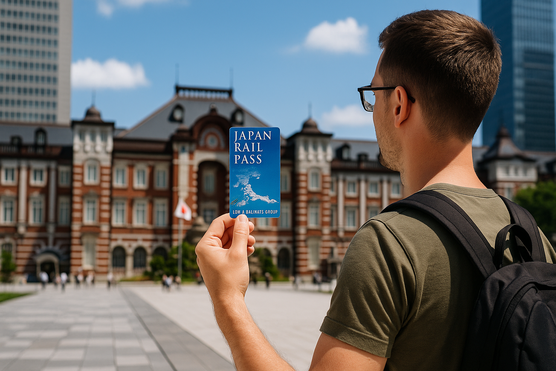
The Japan Rail Pass (JR Pass) used to be one of the easiest travel decisions for first-time visitors to Japan. For many years, the logic was simple: if you were planning to ride the Shinkansen between major cities, you bought the pass and saved money.
That is no longer automatically true. Since the major fare revision, the JR Pass has become a tool that works best for specific itineraries, not a universal bargain for every visitor.
Bottom line: The JR Pass can still be excellent value, but only if you use it for the right routes, activate it on the right day, and understand what it does not cover in cities like Tokyo.
Important JR Pass Notes
- Ordinary Pass prices: 7 days ¥50,000 / 14 days ¥80,000 / 21 days ¥100,000
- Nozomi and Mizuho are not normally fully included — pass holders need an additional special ticket
- Reserved seats can be booked at no extra charge
- The pass covers most JR lines and also includes useful services such as the Tokyo Monorail
In this guide, we will explain how to use the JR Pass effectively in Tokyo and beyond, compare typical routes with regular ticket costs, and show exactly when it makes sense to buy it.
In this article, you will learn:
- What the Japan Rail Pass covers
- How much it costs now
- Why Tokyo is a special case
- Which routes make the pass worth buying
- How to activate it strategically
- Where to place your purchase decision in your trip-planning process
What Is the Japan Rail Pass?
The Japan Rail Pass is a special ticket for foreign visitors entering Japan as temporary visitors. It allows unlimited travel on most JR-operated trains for a fixed number of consecutive days.
In practical terms, the pass can cover:
- Most Shinkansen routes
- JR limited express trains
- JR local and rapid trains
- Some buses and ferry services operated within the pass scope
- The Tokyo Monorail, which can be useful for Haneda Airport access
Important: The JR Pass does not normally include regular rides on Nozomi and Mizuho. Pass holders can use them only by buying an additional special ticket.
Another major benefit is that reserved seats can be booked at no extra charge. This makes the pass more convenient on busy routes, especially for first-time visitors traveling with luggage.
This detail matters because many travelers see “Shinkansen included” and assume every bullet train is fully covered in the same way. That is not quite accurate, and understanding this early helps you avoid frustration when planning between Tokyo, Kyoto, Osaka, and beyond.
Japan Rail Pass Prices in 2026
The current ordinary-car JR Pass prices are as follows:
| Pass Type | Adult Price | Best For |
|---|---|---|
| 7-day Ordinary | ¥50,000 | Compact multi-city trips |
| 14-day Ordinary | ¥80,000 | Broader nationwide itineraries |
| 21-day Ordinary | ¥100,000 | Long, high-mobility trips |
Green Car versions are available at a higher price, but for most leisure travelers, the ordinary pass is the more practical benchmark.
Key decision point: At ¥50,000 for 7 days, the pass is no longer something you buy “just in case.” You should buy it only when your itinerary clearly supports it.
Thinking about buying a JR Pass?
Check the current JR Pass options before finalizing your route.
Check JR Pass OptionsWhy Tokyo Is the Most Misunderstood Part of the JR Pass
Tokyo is where many travelers overestimate the value of the JR Pass. On paper, it feels like a major city with many train lines, so it seems logical that a nationwide rail pass should be useful there. In practice, Tokyo’s transport network is split across multiple operators, and a large part of daily sightseeing relies on subway travel.
The JR Pass is genuinely useful on:
- JR Yamanote Line for major hubs like Shinjuku, Shibuya, Ueno, Ikebukuro, Tokyo Station, and Akihabara
- JR Chuo Line and related city routes
- Some airport and suburban connections
But it does not cover:
- Tokyo Metro
- Toei Subway
- Many of the shortest and most convenient central-city routes visitors actually use

Practical conclusion: The JR Pass can help in Tokyo, but it is not a complete Tokyo transport pass. You will still likely need an IC card such as Suica or PASMO.
The Best Real-World Strategy: JR Pass + IC Card
For most independent travelers, the best approach is not “JR Pass only.” It is a hybrid transport strategy.
- Use the JR Pass for long-distance rail travel and major JR segments
- Use an IC card for subways, buses, and local rides not covered by JR
This combination is the most efficient way to move through Japan without forcing yourself to choose slower or less convenient routes simply because they happen to be covered by the pass.
Real Route Comparisons: When the JR Pass Is Worth It
This is the part that matters most. The question is not “Is the JR Pass good?” The real question is: “Is it good for my itinerary?”
The examples below use rounded planning estimates for regular ticket costs. Exact totals can vary depending on seat type, season, train choice, and whether you choose faster trains or specific reserved seats.
| Sample Route | Approx. Regular Tickets | 7-Day JR Pass | Recommendation |
|---|---|---|---|
| Tokyo → Kyoto → Osaka → Tokyo | ~¥30,000–¥31,000 | ¥50,000 | Regular tickets |
| Tokyo → Kyoto → Hiroshima → Osaka → Tokyo | ~¥50,000 | ¥50,000 | Borderline / depends |
| Tokyo ↔ Kyoto only | ~¥27,000–¥28,000 | ¥50,000 | Regular tickets |
| Tokyo → Kanazawa → Kyoto → Hiroshima → Fukuoka → Tokyo | ~¥78,000+ | 14-day ¥80,000 | JR Pass can make sense |
| Tokyo stay + local day trips | Usually far below ¥50,000 | ¥50,000 | Do not buy the JR Pass |
Case 1: Tokyo → Kyoto → Osaka → Tokyo
This is probably the most common first-time Japan itinerary. It feels substantial because it includes Tokyo, Kyoto, and Osaka, but financially it is usually not enough to justify a 7-day JR Pass.
The reason is simple: Kyoto and Osaka are very close to each other, so that segment adds very little cost. The expensive part is the Tokyo–Kansai round trip. Even then, the total usually remains far below the pass price.
Recommendation: Buy regular Shinkansen tickets instead of the JR Pass for this route.
Case 2: Tokyo → Kyoto → Hiroshima → Osaka → Tokyo
This is where the discussion becomes interesting. Once Hiroshima enters the itinerary, the total transportation cost rises sharply. In many cases, this route reaches the break-even zone for the 7-day JR Pass.
If you value flexibility, easy reservations, and not having to buy separate tickets during the trip, the pass can be reasonable here. If you are optimizing strictly for price and your schedule is very fixed, regular tickets may still be competitive.
Recommendation: This is the classic “maybe yes” JR Pass route. Hiroshima is often the point where the pass starts becoming realistic.
Case 3: Tokyo ↔ Kyoto Only
If your only major long-distance move is a Tokyo–Kyoto round trip, the pass is generally a poor financial choice. Many travelers still consider it because Shinkansen travel feels expensive, but the 7-day pass is priced high enough that one round trip alone usually does not justify it.
Recommendation: Do not buy the JR Pass for this route alone.
Case 4: A Bigger 14-Day Nationwide Trip
Once you start moving across multiple regions—such as Tokyo, Hokuriku, Kansai, Hiroshima, and Kyushu—the value proposition changes. At that point, the 14-day pass becomes more plausible, especially if you want the freedom to take side trips without recalculating every fare.
These are the itineraries where the JR Pass still feels most like the classic all-Japan travel tool many people imagine.
Case 5: Tokyo-Focused City Trip
If your trip is primarily Tokyo, with maybe one or two light day trips, the JR Pass is usually the wrong product. What you actually need is easy urban mobility, and that usually means subways + IC card, not a national rail pass.
Quick rule of thumb:
1 major Shinkansen round trip: usually not worth it
2 major long-distance segments: maybe
3+ expensive long-distance segments in a short window: often where the JR Pass starts working
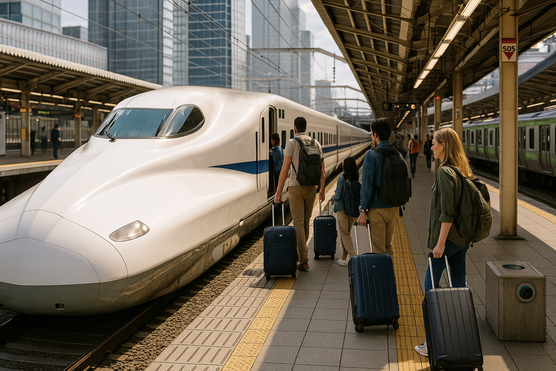
The Most Important Strategy: Activate the JR Pass at the Right Time
Even travelers who buy the correct pass often reduce its value by activating it too early. This is one of the most common mistakes.
The pass runs on consecutive days, so every day matters. If you activate it while spending several local sightseeing days in Tokyo, you are using expensive pass days on journeys that would otherwise cost very little.
Better activation example:
Days 1–3: Tokyo sightseeing with Suica / PASMO
Day 4: Activate JR Pass and take the Shinkansen to Kyoto
Days 5–6: Kyoto / Osaka / Nara area usage
Day 7: Long-distance return or onward segment
Seat Reservations: Use Them
A major practical advantage of the JR Pass is that reserved-seat tickets can be obtained without additional payment. That matters far more than many first-time travelers realize.
On popular routes—especially between Tokyo, Kyoto, Osaka, and Hiroshima—having a reserved seat means:
- No stress about long queues for non-reserved cars
- A more predictable journey with luggage
- Less risk of standing during busy seasons
If you buy the pass through the official reservation platform, you can also use its online reservation workflow for eligible services.
Practical advice: Once your intercity travel dates are fixed, reserve your main Shinkansen seats early. This is especially important during cherry blossom season, Golden Week, summer holidays, and year-end travel periods.
Ready to compare before you buy?
If your trip includes Kyoto, Osaka, Hiroshima, or other long-distance segments, check the pass first.
See JR Pass DetailsCommon Mistakes to Avoid
1. Buying the pass before checking your exact route
The biggest mistake is treating the JR Pass as a default purchase. At current prices, route calculation should come first.
2. Assuming it covers all of Tokyo
It does not. Tokyo Metro and Toei Subway remain outside normal JR Pass coverage, and those systems are central to urban sightseeing.
3. Activating it too early
Your first Tokyo days are often the least efficient time to use a nationwide pass.
4. Ignoring reserved seats
If the pass allows you to reserve seats at no extra cost, use that advantage—especially for major travel days.
5. Choosing the nationwide pass when a regional pass is enough
Some travelers only need a Kansai, JR East, or other regional solution. If your trip is concentrated in one area, a regional pass may produce a better cost structure than the national JR Pass.
So, Should You Buy the Japan Rail Pass?
The best answer is not emotional. It is operational.
Buy the JR Pass if:
- You are making several expensive long-distance rail moves in a short period
- You want nationwide flexibility
- You want convenient seat reservations and simplified logistics
Skip the JR Pass if:
- Your trip is mostly Tokyo
- You are only doing one major Shinkansen round trip
- A regional pass fits your route better
In other words, the JR Pass is no longer a “must-buy.” It is now a precision product. Used correctly, it remains powerful. Used casually, it can be an expensive mistake.
Check the JR Pass before finalizing your rail budget
If your route includes multiple major cities, comparing now can save money later.
View JR Pass Purchase OptionsTravel Smarter Across Japan — and Book Better Once You Arrive
The JR Pass can help you move efficiently between cities. But transport is only one part of a smooth Japan trip. Once you arrive in Tokyo, Kyoto, Osaka, Hiroshima, or Takayama, the next challenge is often actually securing the restaurants and experiences you want.
That is where our service fits in. We help international visitors stay independent while getting support with the bookings that are often difficult to complete from overseas.
Final Thoughts
The Japan Rail Pass still has a place in Japan travel planning, but that place is narrower than it used to be. The travelers who benefit most are those with well-structured, long-distance itineraries.
If your route clearly supports the price, the pass can simplify your trip and keep your intercity travel efficient. If it does not, buying regular tickets—or choosing a regional pass—will often be the better decision.
Best final advice: Plan first, compare second, buy last.
Related Articles: Smart Tips for Getting Around Japan
Transportation
in Japan: The Complete Guide for Tourists
All-in-one overview of trains, buses, taxis, IC cards, and passes.
How to Use Tokyo’s Trains: Complete Guide for Tourists
Navigate JR and Metro more smoothly with practical transfer tips.
How to Use IC Cards in
Japan (Suica, PASMO, ICOCA)
The easiest way to handle subways, buses, and small everyday payments.
How to Take the
Shinkansen in Japan: Step-by-Step Guide
Tickets, seat types, boarding flow, and common first-time questions.
First-Time Travel to Japan: 20 Essential Tips Every Visitor Should Know
A broader planning guide covering transport, money, etiquette, and logistics.
Related Articles: Smart Tips for Getting Around Japan
- 🗾 Transportation in Japan: The Complete Guide for Tourists
All-in-one overview of trains, buses, taxis, IC cards, and passes. - 🚆 How to Use Tokyo’s Trains: Complete Guide for Tourists (Metro, JR, Suica & Transfers)
Navigate JR and Metro like a local with clear transfer tactics. - 💳 How to Use IC Cards in Japan (Suica, PASMO, ICOCA)
Tap-and-go for trains, buses, vending machines, and shops. - 🚄 How to Take the Shinkansen in Japan: Step-by-Step Guide
Tickets, seat types, boarding flow, and oversized baggage rules. - 🧳 How to Use Coin Lockers in Japan: Step-by-Step Guide for Tourists
Find lockers, pay by cash or IC card, and retrieve easily with QR or PIN code. - 📶 How to Use Free Wi-Fi & SIM/eSIM in Japan
Best options for eSIM, pocket Wi-Fi, and reliable hotspots. - 🚻 How to Use Japanese Public Restrooms (Etiquette & Tips)
Washlet buttons, squat toilets, and accessibility features. - 📞 Emergency Numbers in Japan: Police, Fire & Ambulance
110 / 119 and English-speaking hotlines you should save. - 🧭 What to Do if You Get Lost in Tokyo
Step-by-step actions, helpful phrases, and the right apps. - 🔌 How to Charge Your Phone & Use Power Plugs in Japan
Plug types, voltage, free charging spots, and CHARGE SPOT rental guide. - 🏨 First-Time Travel to Japan: 20 Essential Tips Every Visitor Should Know
Comprehensive travel advice — from trains and cash to culture and safety.