How to Use Trains in Japan: A Complete Guide for Tourists
Introduction – Why Japan’s Train System Can Be Confusing
Japan’s train network is one of the most efficient in the world, covering major cities, rural towns, and everything in between. But for first-time travelers, it can feel overwhelming. Multiple train companies, ticket types, and complex station layouts often leave tourists scratching their heads. This guide explains step by step how to use trains in Japan—whether it’s a quick Tokyo metro ride or a cross-country Shinkansen journey.
Overview of Japan’s Train Network
- JR (Japan Railways): The largest network, covering most of Japan, including Shinkansen bullet trains.
- Private Railways: Companies like Keio, Odakyu, Hankyu, and Kintetsu connect suburban and regional areas.
- Subways: Major cities like Tokyo, Osaka, and Kyoto have metro systems.
- Shinkansen: High-speed bullet trains linking Tokyo, Osaka, Kyoto, Hiroshima, and beyond.
Buying Tickets
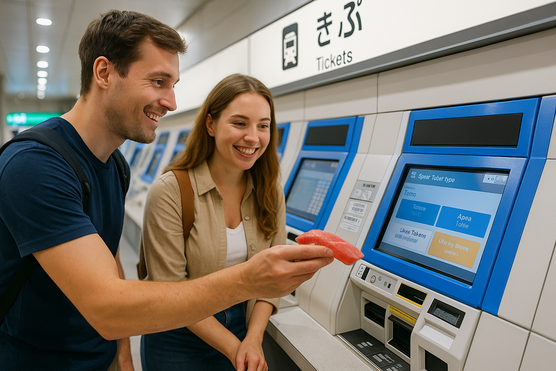
- Ticket Machines – Found in every station, with English options.
- IC Cards (Suica, Pasmo, ICOCA) – Tap-and-go convenience, usable beyond trains.
- Japan Rail Pass – Best for long-distance travelers, unlimited rides on JR lines.
Entering and Exiting the Station
Insert your ticket into the gate and take it back as you pass. IC card users simply tap the card reader. Keep your ticket/IC card until the end of your trip—it’s needed to exit.
Reading Train Maps and Signs
Signs are usually bilingual (Japanese and English). Train lines are color-coded for easy navigation. Stations in Tokyo and Osaka have numbers assigned to each stop. Apps like Google Maps and HyperDia are useful for route planning.
On the Train – Etiquette and Tips
- Quiet Atmosphere: Keep phone calls silent.
- Priority Seats: Reserved for elderly, disabled, and pregnant passengers.
- No Eating/Drinking: Allowed only on Shinkansen and long-distance trains.
- Line Up: Queue politely before boarding.
Using the Shinkansen (Bullet Train)
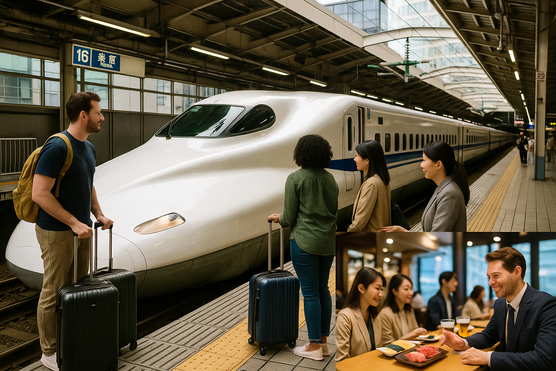
Tickets can be purchased at “Midori no Madoguchi” ticket counters or machines. Reserved seats guarantee comfort, while non-reserved are first-come-first-served. Large luggage should be stored in designated areas. Don’t miss the chance to buy an “ekiben” (station bento) for your journey.
Common Mistakes to Avoid
- Boarding the wrong company’s train despite same destination.
- Forgetting to tap IC card when entering/exiting.
- Assuming one ticket covers both JR and private railways—it doesn’t.
- Bringing large luggage on crowded commuter trains.
Traveler Tips
- Download train apps in advance.
- Travel outside rush hours (7–9am and 5–7pm).
- Carry small change or IC card balance for convenience.
- For rural areas, check last train times—services stop earlier than expected.
How Our Service Helps
While we don’t book train tickets, we help travelers with restaurant and cultural reservations across Japan. Understanding how to navigate the train system makes it easier to reach the amazing dining spots we can secure for you.
Conclusion
Japan’s train system may seem intimidating at first, but with IC cards, English-friendly signs, and a little preparation, it becomes the easiest way to explore the country. From city metros to Shinkansen rides, trains in Japan make traveling smooth, reliable, and enjoyable.
👉 Ready to explore Japan? Let us handle your restaurant reservations while you master the trains.
Related Articles: Smart Tips for Getting Around Japan
- 🗾 Transportation in Japan: The Complete Guide for Tourists
All-in-one overview of trains, buses, taxis, IC cards, and passes. - 🚆 How to Use Tokyo’s Trains: Complete Guide for Tourists (Metro, JR, Suica & Transfers)
Navigate JR and Metro like a local with clear transfer tactics. - 💳 How to Use IC Cards in Japan (Suica, PASMO, ICOCA)
Tap-and-go for trains, buses, vending machines, and shops. - 🚄 How to Take the Shinkansen in Japan: Step-by-Step Guide
Tickets, seat types, boarding flow, and oversized baggage rules. - 🧳 How to Use Coin Lockers in Japan: Step-by-Step Guide for Tourists
Find lockers, pay by cash or IC card, and retrieve easily with QR or PIN code. - 📶 How to Use Free Wi-Fi & SIM/eSIM in Japan
Best options for eSIM, pocket Wi-Fi, and reliable hotspots. - 🚻 How to Use Japanese Public Restrooms (Etiquette & Tips)
Washlet buttons, squat toilets, and accessibility features. - 📞 Emergency Numbers in Japan: Police, Fire & Ambulance
110 / 119 and English-speaking hotlines you should save. - 🧭 What to Do if You Get Lost in Tokyo
Step-by-step actions, helpful phrases, and the right apps. - 🔌 How to Charge Your Phone & Use Power Plugs in Japan
Plug types, voltage, free charging spots, and CHARGE SPOT rental guide. - 🏨 First-Time Travel to Japan: 20 Essential Tips Every Visitor Should Know
Comprehensive travel advice — from trains and cash to culture and safety.