How to Charge Your Phone and Use Power Plugs in Japan: Complete Guide for Tourists
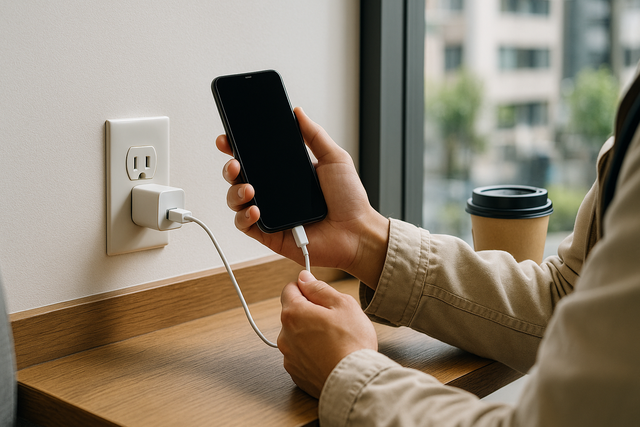
Japan is one of the most technologically advanced countries in the world, yet many visitors are surprised when their chargers don’t fit Japanese outlets. This guide explains Japan’s plug types, voltage, and adapter requirements so you can stay connected throughout your trip.
1. Japan’s Electrical Standards
- Voltage: 100 volts (V) — lower than most other countries. North America (110–120V) is compatible; Europe (220–240V) requires caution.
- Frequency: Eastern Japan (Tokyo): 50Hz / Western Japan (Osaka): 60Hz
Modern devices like iPhones, cameras, and laptops are dual voltage (100–240V), meaning you only need a plug adapter — no converter required.

2. Plug Types in Japan
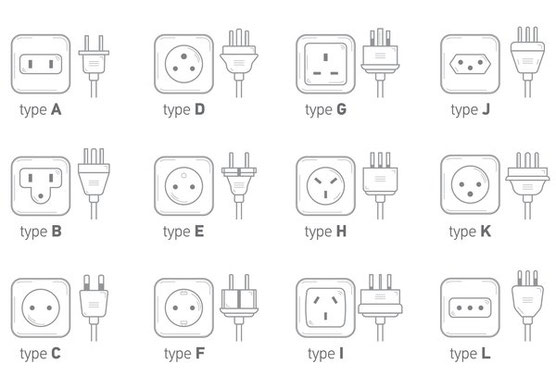
Japan uses Type A plugs — two flat pins identical to North America. Some outlets also support Type B plugs (three pins), but not all.
| Region | Plug Type | Compatible With | Notes |
|---|---|---|---|
| Japan | Type A | USA, Canada | Directly compatible |
| Japan (some) | Type B | USA (three-pin) | May fit loosely |
| Europe, UK, Asia | Type C / G / I | ❌ | Requires adapter |
3. Do You Need a Converter?
Check your device label — if it says Input: 100–240V, you’re safe with just an adapter. Devices like hair dryers or shavers from Europe (220–240V only) require a voltage converter to prevent damage.
Tip: Avoid cheap, unverified converters — overheating risk is high. Look for certified products with the PSE safety mark in Japan.
4. Where to Charge Your Phone in Japan
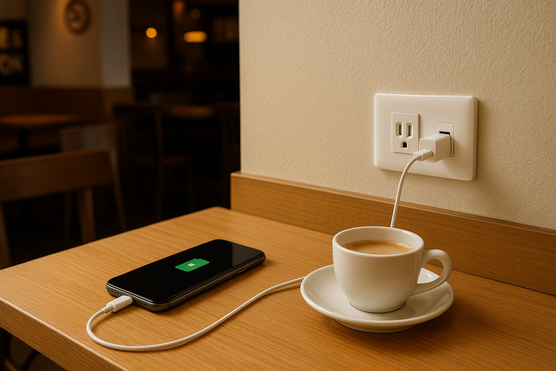
- FREE Cafés & Restaurants: Starbucks, Tully’s Coffee, and Doutor often have outlets or USB ports.
- FREE Train Stations: JR and Metro stations increasingly offer free or complimentary charging spots in waiting areas.
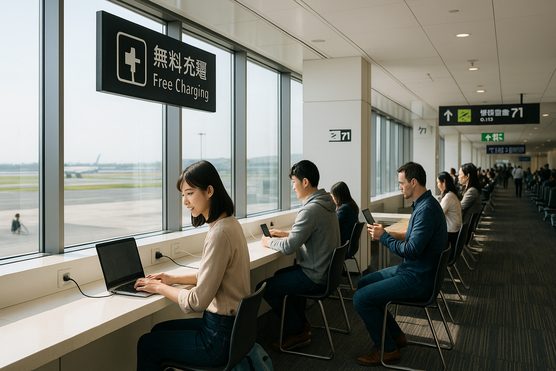
- FREE Airports: Haneda, Narita, and Kansai provide multiple free charging points airside and landside.
- FREE Convenience Stores: Many Lawson, FamilyMart, and 7-Eleven locations have USB power or seats with outlets.
- FREE Hotels: Front desks often lend adapters; some rooms have universal sockets.
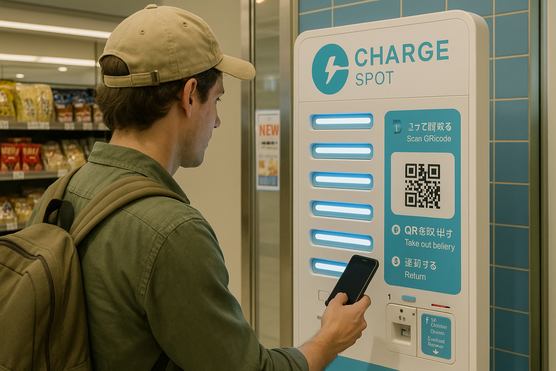
CHARGE SPOT: Mobile Power Bank Rental (Nationwide)
Rent anywhere, return anywhere. CHARGE SPOT is Japan’s largest power-bank sharing network, with 50k+ stations nationwide in convenience stores, train stations, shopping malls, airports, and tourist sites.
How it works
- Open the CHARGE SPOT app (Japan) or supported payment apps (PayPay, d払い, au PAY, LINE, WeChat Pay, Alipay, UnionPay, etc.).
- Use the in-app map to find a nearby station, then scan the QR code to unlock a battery.
- Charge on the go — each battery includes USB-C / Lightning / micro-USB cables built-in.
- Return the battery to any CHARGE SPOT nationwide (empty slot required).
Pricing (as of May 1, 2025)
- Up to 30 min: ¥165
- 30–60 min: ¥330
- 1–3 hours: ¥430
- 3–6 hours: ¥500
- 6–12 hours: ¥570
- 12–24 hours: ¥640
- After 24 hours: +¥360 per additional 24-hour period (up to 120 hours)
Note: If not returned within the maximum period, an unreturned/damage fee may apply (Japan site currently lists a total charge of ¥4,080 including penalty). Prices and terms may vary by location; check the official app/website for the latest details.
Official Links
- Japan (service, pricing, supported apps): chargespot.jp
- Station map (find & return anywhere): web.charge-spot.com
- Global concept & network: franchise.chargespot.global
5. Safety Tips & Etiquette
- Do not block outlets for long periods in public areas.
- Charging on trains is only allowed where USB ports are provided.
- Always use certified adapters with safety marks.
- Unattended charging is discouraged in cafés and airports.
6. Summary
Japan’s 100V Type A plug system is simple once you know what to expect. North American devices work directly, while travelers from Europe or Asia should bring a universal adapter. Charging stations and power banks are widely available, so keeping your devices powered is easy — no need to worry about losing connection during your trip.
Related Articles: Smart Tips for Getting Around Japan
- 🗾 Transportation in Japan: The Complete Guide for Tourists
All-in-one overview of trains, buses, taxis, IC cards, and passes. - 🚆 How to Use Tokyo’s Trains: Complete Guide for Tourists (Metro, JR, Suica & Transfers)
Navigate JR and Metro like a local with clear transfer tactics. - 💳 How to Use IC Cards in Japan (Suica, PASMO, ICOCA)
Tap-and-go for trains, buses, vending machines, and shops. - 🚄 How to Take the Shinkansen in Japan: Step-by-Step Guide
Tickets, seat types, boarding flow, and oversized baggage rules. - 🧳 How to Use Coin Lockers in Japan: Step-by-Step Guide for Tourists
Find lockers, pay by cash or IC card, and retrieve easily with QR or PIN code. - 📶 How to Use Free Wi-Fi & SIM/eSIM in Japan
Best options for eSIM, pocket Wi-Fi, and reliable hotspots. - 🚻 How to Use Japanese Public Restrooms (Etiquette & Tips)
Washlet buttons, squat toilets, and accessibility features. - 📞 Emergency Numbers in Japan: Police, Fire & Ambulance
110 / 119 and English-speaking hotlines you should save. - 🧭 What to Do if You Get Lost in Tokyo
Step-by-step actions, helpful phrases, and the right apps. - 🔌 How to Charge Your Phone & Use Power Plugs in Japan
Plug types, voltage, free charging spots, and CHARGE SPOT rental guide. - 🏨 First-Time Travel to Japan: 20 Essential Tips Every Visitor Should Know
Comprehensive travel advice — from trains and cash to culture and safety.